![[2026 Guide] The Blurting Method: Skyrocket Memory Retention with Active Recall & AI](https://pathmemoria.tsmichi.com/blog/blurting_hero.jpg)
"I spent hours making beautiful color-coded study notes, but my exam scores didn't improve at all..."
"Is the viral TikTok 'Blurting Method' actually scientifically effective?"
Hello! I am Taku, a high school teacher and software developer behind PathMemoria. Throughout years of evaluating student study habits, I have repeatedly observed a harsh reality: students who spend the most time rewriting aesthetic, colorful notes often struggle the most during real examinations. Transcribing textbooks onto paper is largely passive clerical work for the human brain.
Meanwhile, the study method dominating international student communities on TikTok (#blurtingmethod) and top universities like Oxford and Harvard with hundreds of millions of views is The Blurting Method—the practice of dumping everything you remember onto a blank piece of paper.
The Blurting Method distills cognitive psychology's most powerful memory mechanism—Active Recall—into its purest, most efficient form. However, traditional paper blurting suffered from major flaws: messy scrap paper waste, exhausting manual error checking, and forgotten knowledge gaps due to the forgetting curve. In 2026, this protocol has evolved dramatically through Google's state-of-the-art Gemini AI diff checking and FSRS v6 spaced repetition scheduling. In this guide, I will break down the science of blurting and show you how to automate your review cycle for peak test performance.
✓ Key Takeaways in This Guide
- The cognitive neuroscience behind the viral Blurting Method protocol
- Why retrieving facts onto blank paper multiplies memory retention by 5x
- The 4 essential steps to eliminate study fatigue and scrap paper clutter
- Converting missed knowledge gaps into permanent memories with AI & FSRS v6
| Study Method | Traditional Aesthetic Note-Taking | Blurting × AI (PathMemoria) |
|---|---|---|
| Cognitive Retrieval Effort | Extremely low (Passive copying while looking) | Maximum (Pure active recall from zero cues) |
| Study Duration & Fatigue | 2–3 hours (Hand cramping, shallow focus) | 10–15 minutes (High-intensity mental sprint) |
| Knowledge Gap Detection | Blind (Masked by the illusion of competence) | AI scans and highlights missing points in seconds |
| Automated Review Scheduling | None (Passive skimming of old notebooks) | Missed gaps convert to cards with FSRS v6 scheduling |
Why Does Blurting Work? The Neuroscience of Zero-Cue Recall
The term "Blurting" comes from the act of suddenly speaking or pouring out words. In cognitive learning, it refers to reading a target section of study material, closing the book completely, and pouring out every single concept, term, formula, and connection onto blank paper from memory.
The Viral Sensation Taking Top Universities by Storm

The Blurting Method originated as an organic trend among high-achieving students sharing their revision routines online.
Stories of switching from 10-hour note-taking sessions to 15-minute blurting drills and jumping to straight A's went viral across the globe. Today, it is widely utilized by students preparing for competitive exams like the USMLE, Bar Examination, CPA, and university entrance tests.
Behind the social media buzz lies solid cognitive science: pure Active Recall. For broader foundational concepts, review our Science-Backed Memorization Methods Guide.
Never worry about neat handwriting or pretty layouts. Blurting is about mental retrieval speed and dumping raw information out of working memory as fast as possible.
Why "Blank Paper Recall" Multiplies Retention by 5x
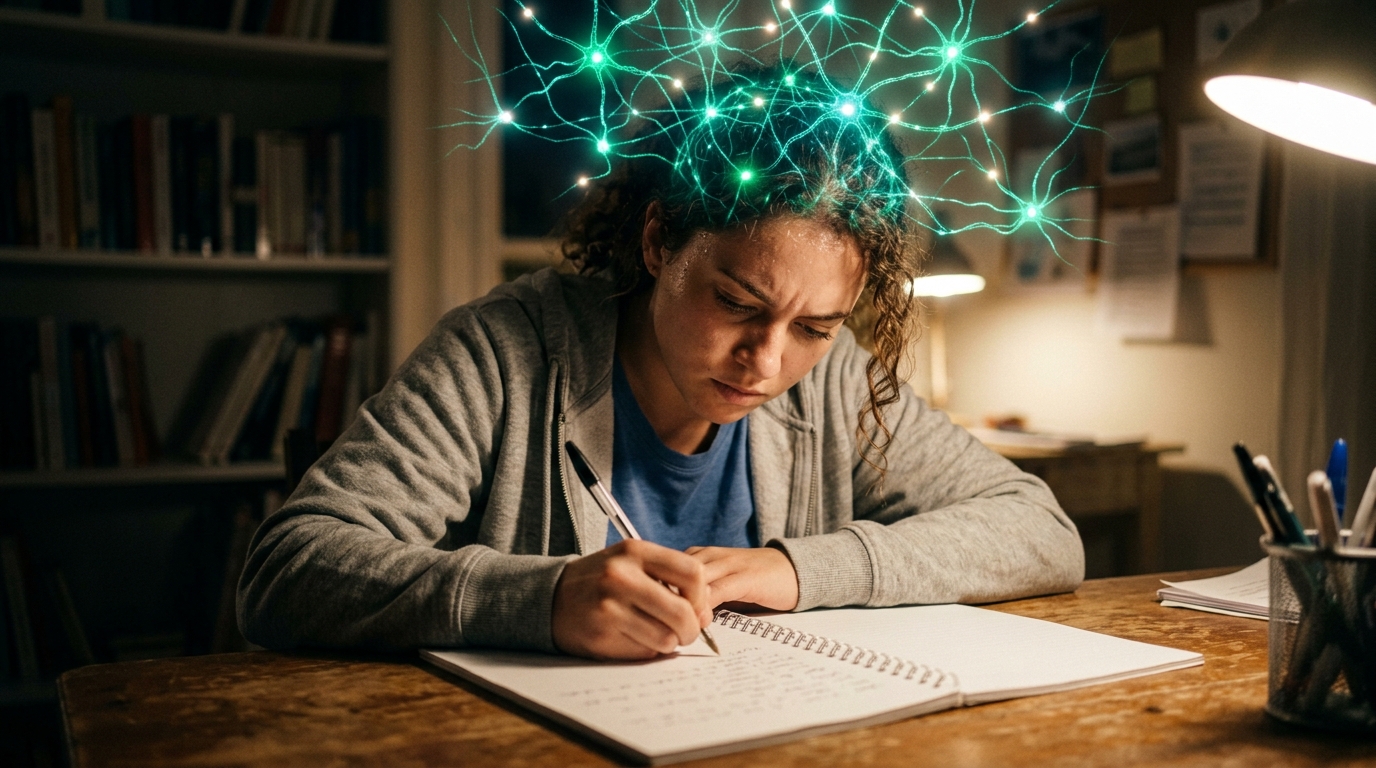
Why does writing on blank paper create such profound retention?
In a landmark study published in Science (Karpicke & Roediger, 2008), researchers demonstrated that repeated retrieval practice produces dramatically higher long-term retention than repeated study reading.
When facing a completely blank sheet of paper, your brain has zero external prompts. It is forced to search its neural pathways: "What were the three key categories? How were those formulas connected?" This intense mental exertion—known as Desirable Difficulty—signals the hippocampus that the information is critical for survival, locking it into long-term storage.
The Trap of Aesthetic Notes: Why "Neat Note-Takers" Fail Exams

A heartbreaking pattern in secondary education is the hardworking student who produces breathtaking notebooks with multiple pastel highlighters yet underperforms on exam day.
Transcribing material while looking at a textbook traps the brain in the "Illusion of Competence" (American Psychological Association APA Cognitive Research).
Because the information is physically visible on the page, the brain falsely assumes it has mastered the concept. But on test day, the exam paper is completely blank. If you have never practiced retrieving knowledge from a blank slate, your mind will draw a complete blank when it matters most.
The 4 Essential Steps of the Classic Blurting Protocol

The standard Blurting protocol consists of four quick, actionable steps:
- Step 1 (Focused Input · 5 min): Set a timer and read a 1–2 page section of your textbook with full concentration.
- Step 2 (Blank Blurting · 5–10 min): Close all books. On a blank sheet of paper, write down every term, diagram, and concept you can recall in black pen.
- Step 3 (Red Pen Gap Check · 3 min): Open the textbook and compare. Using a red pen, fill in missing facts, incorrect definitions, or omitted steps.
- Step 4 (Targeted Weakness Drill · 2 min): Review only the red-pen additions to reinforce what was missed.
This 15-minute sprint clearly separates what you actually know from what you only thought you knew. To reinforce conceptual understanding further, pair this with the Feynman Technique Guide.
The 3 Major Pitfalls of Paper Blurting

While powerful, traditional paper blurting creates three significant obstacles that lead to study burnout:
- Pitfall 1 (Scrap Paper Clutter): Writing several blank pages daily leaves desks piled with disorganized scrap paper that usually gets thrown away.
- Pitfall 2 (Tedious Manual Checking): Line-by-line comparison between textbooks and messy handwritten notes is mentally draining.
- Pitfall 3 (The Forgetting Curve Trap): Adding red-pen corrections provides a temporary fix, but without spaced scheduling, the exact same gaps are forgotten a week later.
To understand the mathematical dynamics of memory decay, explore our guide on Optimal Review Timing from the Forgetting Curve.
Next-Gen Protocol: Supercharging Blurting with AI & FSRS
PathMemoria was built to resolve these structural limitations by digitizing blurting into an automated, long-term memory engine.
Instant AI Diff Checking & Knowledge Gap Extraction
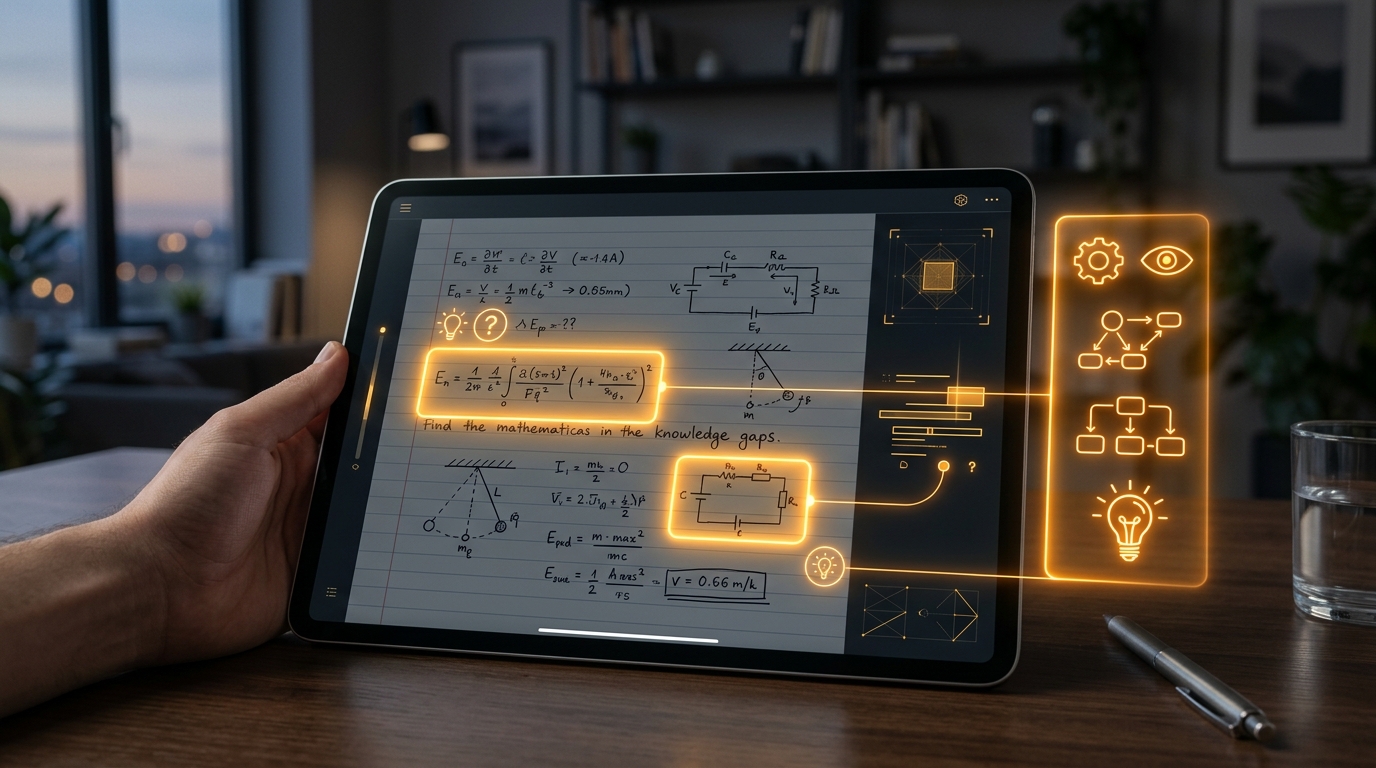
With PathMemoria, tedious manual note comparison is eliminated.
Whether you type your blurted keywords into the app or take a quick photo of your handwritten paper, Google's latest Gemini AI compares your retrieval dump against your study syllabus and instantly pinpoints your critical knowledge gaps.
By delegating error checking to AI, you save energy and keep your momentum going. For step-by-step instructions, review our AI Generation & Batch Explanations Tutorial.
Paper blurting is disposable, but digital blurting converts your blind spots into a structured personal flashcard deck designed for long-term mastery.
Convert Missed Points into Interactive Flashcards in 1 Click

The true goldmine of any blurting session is the information you were unable to recall.
In PathMemoria, every missed concept detected by the AI can be converted into active flashcard prompts with a single tap.
Instead of wasting time repeatedly reviewing easy facts you already know, your study deck focuses exclusively on high-yield exam vulnerabilities.
Automate Weakness Scheduling with FSRS Spaced Repetition AI

Your newly created weakness cards are managed by the next-generation FSRS v6 cognitive algorithm.
Instead of manually organizing review schedules, the app prompts you on Day 1, Day 3, Day 7, and Day 16 based on your individual recall stability.
Simply opening the app during daily commute pockets ensures that every single knowledge gap identified during blurting is permanently closed before test day.
Rapid Multi-Modal Output: Fast Typing & Hands-Free Audio

You don't need a desk and pen to practice blurting.
PathMemoria supports rapid typing recall on laptop keyboards as well as Hands-Free Voice Autoplay (Audio Study) on mobile devices.
Listening to audio prompts while walking or commuting and mentally blurting the answers turns everyday transit into powerful active recall sessions.
Crack Competitive Exams with the Blurting Routine

The Blurting Method combined with PathMemoria provides an unbeatable protocol for school finals, university entrance tests, and professional licensure:
- Read & Dump: Stop rewriting notes. Read for 5 minutes and blurt everything onto a blank page or into the app.
- AI Gap Detection: Let AI pinpoint missed facts and generate flashcards instantly.
- Spaced Practice: Complete scheduled FSRS review cards during short daily breaks.
- Exam Triumph: Enter test day having trained on blank pages, solving complex questions with effortless recall.
Leave passive note-copying behind. Experience the world's most efficient retrieval practice on PathMemoria today!