
"I spend all day drilling calculus problems, but on mock exams, I freeze and can't figure out which formula to apply..."
"Studying the same subject for hours causes extreme boredom, cognitive fatigue, and loss of focus..."
Hello! I am Taku, a high school educator with over 20 years of classroom experience and the developer behind PathMemoria.
When preparing for competitive college entrance exams or high-stakes certifications, most students adopt Blocked Practice—spending hours or entire days on a single topic. However, cognitive psychology and neuroscience demonstrate that this single-subject cramming creates the 'Fluency Illusion,' where learners feel confident while studying but experience catastrophic memory failure during actual exams.
To overcome this limitation, leading cognitive scientists worldwide recommend Interleaved Practice (Interleaving)—the method of systematically mixing different subjects and problem types during a study session. By combining interleaving with our Pomodoro & Spaced Retrieval Study Hack, Active Recall Master Guide, and Optimal Forgetting Curve Spacing, you can double your exam scores and master genuine problem-solving agility.
✓ Key Takeaways in This Guide
- Why single-subject blocked study fails: The neuroscience of the Fluency Illusion
- Landmark UCLA and Cornell experiments: How interleaving doubles long-term exam retention (77% vs 38%)
- How 'Desirable Difficulties' and cognitive discrimination build resilient cortical synapses
- A 5-step daily routine: 3-subject rotation fused with 25-minute Pomodoro timeboxing
- Automating cross-deck interleaving flashcard reviews with PathMemoria's FSRS AI
When analyzing struggling students in honors tracks, over 90% do not lack formula knowledge—they lack cognitive discrimination to identify which strategy to employ when facing mixed exam prompts. Blocked practice fails to train this crucial skill. Interleaving builds true exam dominance. Discover more on Taku's Educator Profile & Mission.
| Study Dimension | Traditional Blocked Practice (Single-Subject) | Interleaved Practice (Alternating Subjects) |
|---|---|---|
| Learning Pattern | Topic A ➔ Topic A ➔ Topic A (Monotonous repetition) | Topic A ➔ Topic B ➔ Topic C (Systematic cross-topic shuffling) |
| Perceived Effort | Feels easy and smooth (Fluency Illusion) | Requires effortful recall (Desirable Difficulties) |
| Cognitive Skill Built | Mechanical execution of known procedures | Problem Discrimination (Selecting the right strategy) |
| Exam-Day Performance | Freezes on novel or mixed-topic exam questions | Effortless mastery on unseen exam prompts (2x higher scores) |
Why Single-Subject Cramming Fails: The Neuroscience of Blocked Practice
Setting aside five uninterrupted hours for a single subject feels organized and productive. However, decades of cognitive research demonstrate that blocked practice severely hinders long-term conceptual retention and transfer.
Cognitive Science Evidence: Landmark Blocked vs Interleaved Experiments

Pioneering experiments by Dr. Robert Bjork (UCLA) and Dr. Doug Rohrer demonstrated the power of interleaving. When students learned geometric volume formulas, one group practiced in blocks (sphere problems, then cylinder problems, then cone problems), while the interleaved group solved mixed problems in random order.
During initial training, the blocked group scored higher (89% vs 60%) because they simply reused the same formula repeatedly. However, on the unannounced cumulative test one week later, the blocked group's accuracy crashed to 38%, while the interleaved group retained an astonishing 77% accuracy.
According to studies highlighted by the American Psychological Association (APA), interleaving trades short-term practice ease for permanent conceptual mastery.
The Classroom Dilemma: Why Students Who Ace Homework Flunk Comprehensive Exams

In high school classrooms, I frequently counsel students who complete every chapter exercise with perfect accuracy yet score poorly on midterm and entrance exams.
When working through a chapter titled 'Quadratic Equations,' a student never has to ask, 'What type of mathematical problem is this?' They already know the answer. They merely execute algebraic calculations without engaging the critical cognitive process of Strategy Discrimination.
Real-world examinations do not label questions by chapter. Every problem requires independent diagnosis, classification, and retrieval. Blocked practice entirely skips this diagnostic training, leaving students defenseless against mixed exam prompts.
Desirable Difficulties: How Retrieval Strain Builds Resilient Synapses
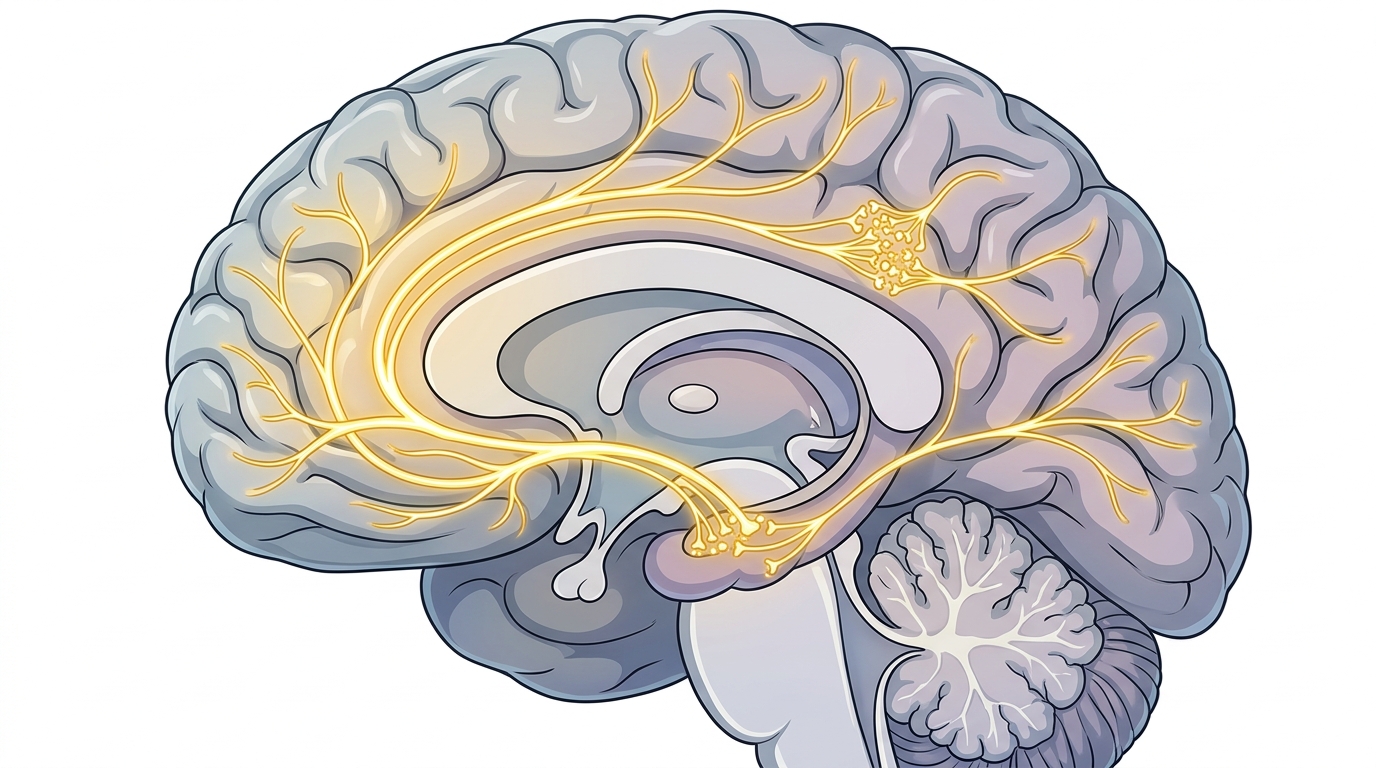
When learners transition from blocked study to interleaving, they often feel that studying has become harder and slower. In cognitive science, this friction is known as Desirable Difficulties.
When drilling the same topic continuously, answers linger effortlessly in working memory. When you switch to a different subject and return later, your brain must actively reconstruct the neural pathway and retrieve facts from cortical storage. This effortful retrieval stimulates neurochemical release and strengthens synaptic dendritic spines.
As detailed in our breakdown of The Ebbinghaus Forgetting Curve Truth, the brain discards easily accessed data as trivial noise, while deeply cementing information that required deliberate retrieval effort.
Comparative Breakdown: Blocked vs Interleaved Learning Dynamics

Understanding the distinction between initial encoding and durable retention clarifies how to structure daily study schedules.
Blocked practice is useful solely for initial conceptual introduction. Once a concept is introduced, all subsequent review, problem-solving, and flashcard practice must be interleaved to prevent cognitive stagnation.
To optimize your flashcard setup, explore our guides on Custom Excel Flashcard Templates and our Top Flashcard Apps Comparison.
Eliminate Boredom & Fatigue: Dopamine Neuromodulation Across Subject Shifts

Beyond memory consolidation, interleaving provides a vital neurobiological advantage: eliminating sensory habituation and sustaining laser focus.
Processing homogeneous cognitive inputs for hours exhausts localized neural circuits in the prefrontal cortex, leading to severe attentional drift. Shifting from quantitative calculations (math) to linguistic processing (languages) or visual spatial recall (diagrams) engages entirely different cortical networks.
The brain perceives these topic shifts as novel stimuli, triggering dopamine neuromodulation that refreshes intrinsic motivation and preserves high-density focus throughout extended study blocks.
5 Actionable Techniques to Master Interleaved Practice Today
Follow these five field-tested techniques to integrate interleaving into your daily routine for maximum retention and effortless exam mastery.
Technique 1: Select 3 Cognitively Complementary Subjects

The golden rule of interleaving is to limit your active rotation to approximately three subjects per study block. Shuffling too many topics causes cognitive overload, while two topics offer insufficient variability.
Choose subjects that share thematic relevance but demand distinct cognitive operations:
- College Prep Example: Calculus (algorithmic logic) ➔ English Reading (linguistic decoding) ➔ Physics (formula application)
- Professional Certification Example: Accounting (ledger mechanics) ➔ Financial Statements (Image Occlusion Diagram Masking) ➔ Legal Regulations (statute recall)
- Language Acquisition: Vocabulary recall ➔ Syntax exercises ➔ Audio shadowing
Technique 2: Synchronize Subject Shifts with 25-Minute Pomodoro Intervals

Pairing interleaving with the Pomodoro Technique (25 minutes focus + 5 minutes rest) creates an unbeatable study structure.
Set a strict 25-minute timer. When the timer chimes, switch to the next scheduled subject, even if you are mid-problem. This timed interruption harnesses the psychological Zeigarnik Effect, prompting your subconscious to incubate solutions while you engage in subsequent tasks. During daily commutes, reinforce concepts with Background Audio Auto-Play Mode.
Technique 3: Shuffle Sub-Chapter Problem Types in Math & Sciences

Interleaving applies within single disciplines just as powerfully as across multiple subjects.
In mathematics, rather than solving 20 consecutive integration problems, alternate between derivatives, probabilities, vectors, and integrals. This forces your brain to analyze problem features and identify the required theorem before beginning calculations. Deepen conceptual foundations using the Feynman Technique.
Technique 4: Prevent Interference with 1-Minute Blank Sheet Brain-Dumps

The primary concern learners face when adopting interleaving is Proactive and Retroactive Interference—where concepts from adjacent subjects bleed together.
The antidote is a 1-minute blank sheet brain-dump (Blurting) immediately upon concluding each 25-minute block. Close your books and sketch the core formulas and key relationships you just learned onto a blank notepad (The Blurting Method Protocol).
This 60-second retrieval practice crystalizes recently encoded facts into discrete memory packets, shielding them from interference when the next subject begins.
Technique 5: Automate Cross-Deck Interleaving with PathMemoria's FSRS AI

Manually shuffling physical flashcards and scheduling multi-subject review intervals is tedious. Next-generation flashcard platform PathMemoria automates this entire pipeline.
PathMemoria enables one-tap Cross-Deck Interleaved Review, aggregating cards from languages, sciences, and professional exams into a seamless smart study session. The advanced FSRS v6 spaced repetition engine computes optimal review intervals based on your self-assessments (Again [1] / Hard [2] / Perfect [3]), perfectly synchronizing your progress with Exam Target Countdown Schedules. Read our PathMemoria vs Anki vs Quizlet Comparison for a complete feature audit.
Master Genuine Exam Dominance with Interleaved Practice

Monotonous single-subject marathons offer temporary comfort, but interleaving produces resilient, transferable intelligence.
Transform your daily study by alternating three subjects in 25-minute Pomodoro intervals. Within weeks, you will experience effortless strategy recall and unmatched problem-solving agility.
Start your scientifically optimized interleaved study routine with PathMemoria today!
📝 Review Quiz 1: Interleaving Superiority
Question: Why does interleaved practice produce nearly double the test accuracy of blocked practice on cumulative examinations?
💡 View Answer and Explanation
Answer: Interleaving systematically trains Strategy Discrimination—the cognitive ability to identify which solution strategy to apply when facing unprompted, mixed exam questions.
Explanation: Blocked practice predetermines the solution method, bypassing strategy selection. Interleaving forces effortful retrieval (Desirable Difficulties), cementing adaptable long-term memory.
📝 Review Quiz 2: Interference Prevention
Question: What is the most effective protocol to prevent proactive and retroactive cognitive interference when rapidly switching subjects?
💡 View Answer and Explanation
Answer: Perform a 1-minute blank sheet brain-dump (Blurting) immediately upon finishing each 25-minute study block.
Explanation: Brain-dumping core formulas and relationships crystalizes recent memories into discrete cognitive packages, shielding them from interference before the next subject begins.


![[2026 Guide] The Blurting Method: Skyrocket Memory Retention with Active Recall & AI](https://pathmemoria.tsmichi.com/blog/blurting_hero.jpg)