
"I re-read my textbooks for hours, but my mind goes completely blank during exams..."
"I spent all weekend creating colorful highlight summaries, but my test scores never improve..."
Hello! I am Taku, a high school educator and software engineer behind PathMemoria. When guiding hundreds of students every year, I repeatedly see that academic struggles are rarely due to poor memory capacity. The real culprit is relying on passive, input-heavy study habits that violate the fundamental cognitive architecture of the human brain.
In cognitive psychology and educational neuroscience, researchers overwhelmingly agree that the single most powerful strategy for durable learning is Active Recall (Retrieval Practice)—the deliberate mental effort to retrieve knowledge from memory rather than passively reviewing it. In this guide, I examine the scientific evidence behind active retrieval, dismantle the dangerous "Fluency Illusion" of summary notes, and provide an actionable 5-step protocol to double your retention rate starting today.
✓ Key Takeaways in This Guide
- Why re-reading textbooks fails: Dr. Karpicke's landmark Science study on retrieval testing
- How colorful summary notebooks create the deceptive "Fluency Illusion"
- Synaptic mechanisms of Long-Term Potentiation (LTP) triggered during active retrieval
- 5 actionable active recall protocols: Blurting, Self-Quizzing, Digital Flashcards, FSRS AI, and Audio Testing
| Learning Dimension | Passive Review (Re-reading & Notes) | Active Recall (Retrieval Practice) |
|---|---|---|
| Brain Operation Mode | Passive input (Scanning text visually) | Active retrieval (Searching internal memory) |
| 1-Week Memory Retention | 20%–35% (Rapid decay) | 75%–85% (Consolidated into long-term memory) |
| Cognitive Effort Sensation | Easy and comfortable (False mastery) | Challenging mental effort (Desirable Difficulty) |
| Weakness Identification | Discovered too late during final exams | Immediate diagnostic feedback on knowledge gaps |
Why Re-Reading and Summary Notes Fail: The Neuroscience of Retrieval Practice
Many students spend hours crafting color-coded study guides and re-reading highlighted paragraphs. Let's examine why these traditional study methods produce minimal long-term retention.
Stop Re-Reading! Dr. Karpicke's Science Study Proves Retrieval Dominance

In a seminal paper published in the journal Science (Karpicke & Roediger, 2008), researchers divided students into four study conditions to learn foreign vocabulary and tested their retention after one week.
Students who repeatedly tested themselves achieved an 80% retention rate one week later, regardless of whether they re-read the material. Conversely, students who repeatedly re-read without testing dropped to 35% retention.
This empirical proof confirms that repeated reading does virtually nothing for long-term memory consolidation; testing yourself is the true engine of memory.
The "Fluency Illusion": Why Beautiful Summary Notes Lead to Exam Day Failure

In high school classrooms, I frequently encounter dedicated students whose notebooks are artistic masterpieces of color-coded pens and post-it notes. Yet on exam day, their scores remain mediocre.
Cognitive scientists call this the Fluency Illusion. When reading clear textbook explanations while taking notes, the brain effortlessly processes information and falsely assumes, 'I understand and know this completely.'
Copying sentences is mere motor transcription. The moment you close the book, the illusion shatters because your neural retrieval pathways were never exercised.
Synaptic Strengthening: How Neural Retrieval Builds Long-Term Potentiation

At the cellular level, memory formation relies on Long-Term Potentiation (LTP)—the long-lasting strengthening of synapses based on recent patterns of activity.
According to the American Psychological Association (APA), passive input produces fleeting electrical signals that fade within hours.
When you force your brain to recall an answer without looking, the hippocampus signals the cerebral cortex that this specific pathway is vital. The brain synthesizes new synaptic proteins, permanently wiring the information into long-term storage.
Treat your memory like a muscle. Reading a book is like watching someone lift weights at the gym. Actively recalling the answer is the actual rep that builds real cognitive strength.
The Desirable Difficulties Principle: Why Mental Strain Cement Memories

Beginners often complain that active recall feels exhausting. However, that cognitive resistance is precisely what creates mastery.
Pioneered by UCLA cognitive psychologist Dr. Robert Bjork, the Desirable Difficulties framework proves that learning conditions that require active effort and mild difficulty promote superior long-term retention and flexible transfer.
Effortless learning is rapidly forgotten; the 3-second mental struggle to retrieve a concept is the exact biological signal that commands your brain to lock it in.
5 Actionable Active Recall Protocols to Master Any Subject
Here are the five most effective, field-tested retrieval protocols to implement active recall into your daily study routine immediately.
Protocol 1: The Blurting Method (Blank Sheet Brain-Dump)

The Blurting Method is the fastest diagnostic retrieval protocol:
- Read one section of a textbook with 100% focus.
- Close the book completely.
- Take a blank white sheet of paper and spend 2–3 minutes writing down every concept, formula, and diagram you can remember.
- Re-open the book and use a red pen to fill in everything you missed.
The red ink highlights your exact blind spots. Learn more in our Blurting Method Study Hack Guide.
Protocol 2: Self-Quizzing Notes (Cornell Q&A Method)

Instead of summarizing facts during lectures, write questions to your future self. In the left margin, write 'Q: What is the primary function of the myelin sheath?' and cover the right-hand answer column.
Whenever you review, treat your notebook as an interactive exam.
Protocol 3: Digital Flashcards for High-Volume Rapid Testing

Digital flashcards eliminate positional memorization bias through automatic shuffling. Use Excel CSV Bulk Imports or Image Occlusion Masking to generate hundreds of active test cards in seconds.
Protocol 4: Automated FSRS Spaced Repetition Integration

Active recall reaches maximum potency when synchronized with Spaced Repetition (Distributed Practice). Testing right when retrievability dips to 90% triggers the strongest memory consolidation.
On PathMemoria, the FSRS v6 AI calculates individual stability for every card, slashing review workloads by 30% while maintaining 90%+ retention. Learn more in our Forgetting Curve Review Timing Guide.
Protocol 5: Hands-Free Audio Recall for Commuting
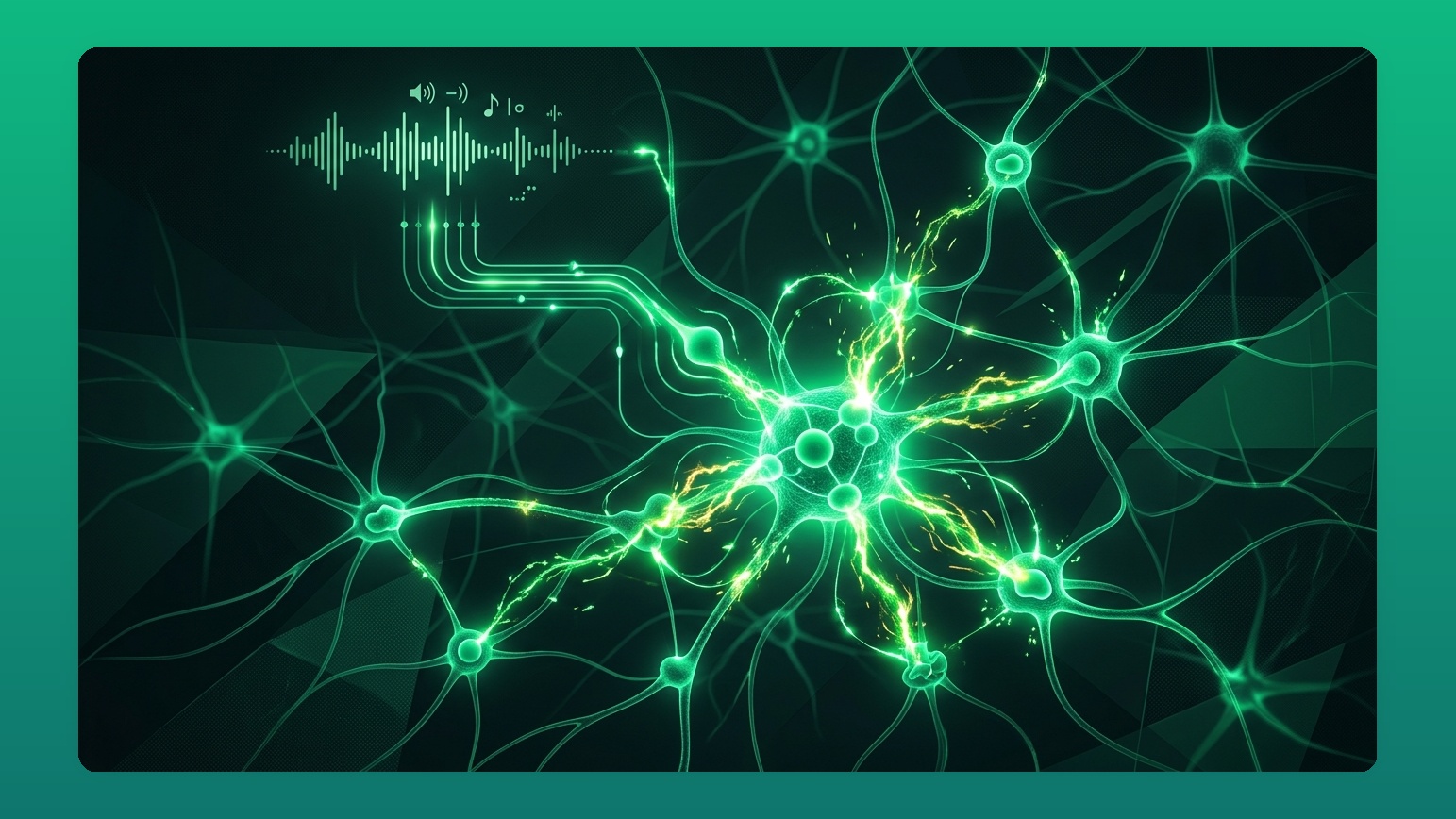
Use PathMemoria's Hands-Free Voice Autoplay with a 3-second pause between prompt and answer. Hearing the question, retrieving the answer mentally, and listening to immediate audio verification turns crowded train rides into high-yield study sessions.
Stop passive re-reading today. Start your scientifically backed active recall journey with PathMemoria and turn study into lasting mastery!

![[2026 Guide] The Blurting Method: Skyrocket Memory Retention with Active Recall & AI](https://pathmemoria.tsmichi.com/blog/blurting_hero.jpg)