![[2026 Guide] School Exam Study Hacks: Score 90%+ with Digital Flashcard Protocols](https://pathmemoria.tsmichi.com/blog/school_test_hero_2026.jpg)
Hello, I'm Taku. Do you often feel overwhelmed before school exams, unsure of where to start, or end up completely drained just copying worksheet answers into your notebook? For middle and high school students, school exam scores and GPA directly impact college admissions, GPA requirements, and academic scholarship opportunities, making them critically important milestones.
Drawing from my extensive experience teaching in high school classrooms, top-ranking students who consistently score in the 80s, 90s, and above are not sacrificing sleep to pull all-nighters. Instead, they simply leverage smart digital techniques like image occlusion to turn worksheets into instant quizzes and consistently execute spaced repetition cycles rooted in cognitive science. Official resources like the U.S. Department of Education Guidelines on Personalized Learning also emphasize utilizing digital technology for effective, tailored study. In this guide, I will break down the ultimate memorization strategies to eliminate manual busywork and achieve your highest test scores in record time.

Effective Study Methods to Maximize School Exam Memorization
A common trait among students struggling to raise their exam scores is relying on low-effort habits like passively skimming textbooks or spending hours handwriting pristine summary notes. These activities consume massive amounts of time without challenging the brain. Below are five proven memorization strategies to convert your school materials into instant quizzes so you can recall answers effortlessly during exams.
Turn Worksheets and Handouts into Quizzes with Image Occlusion
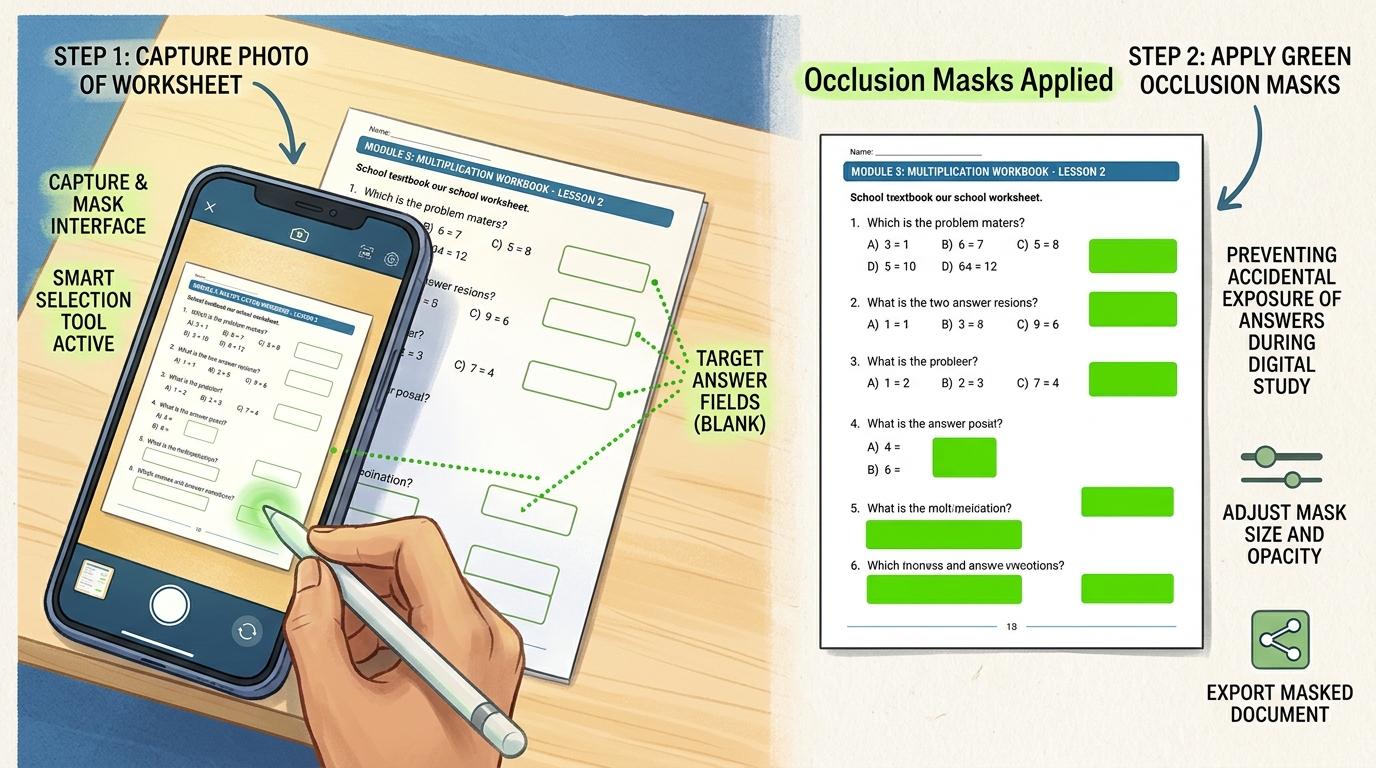
Over 80% of school exam questions come directly from assigned worksheets, textbook exercises, and supplementary study guides. However, many students fall into the trap of using physical red plastic sheets that easily slip to reveal answers, or spending hours writing out questions and answers by hand into a notebook. Transcribing notes consumes two to three hours with virtually zero cognitive retention, resulting in wasted effort and exhaustion.
Image Occlusion completely solves this inefficiency. By snapping a photo of your study handouts or textbook diagrams with your smartphone and placing digital occlusion masks over key terms, dates, or formulas with a single tap, you can create a custom quiz deck in seconds. Tapping the screen instantly reveals the hidden answer, cutting out 100% of repetitive handwriting and allowing you to drill through dozens of pages every hour like a high-speed game.
Strengthen Retrieval Capacity Through Active Recall Practice
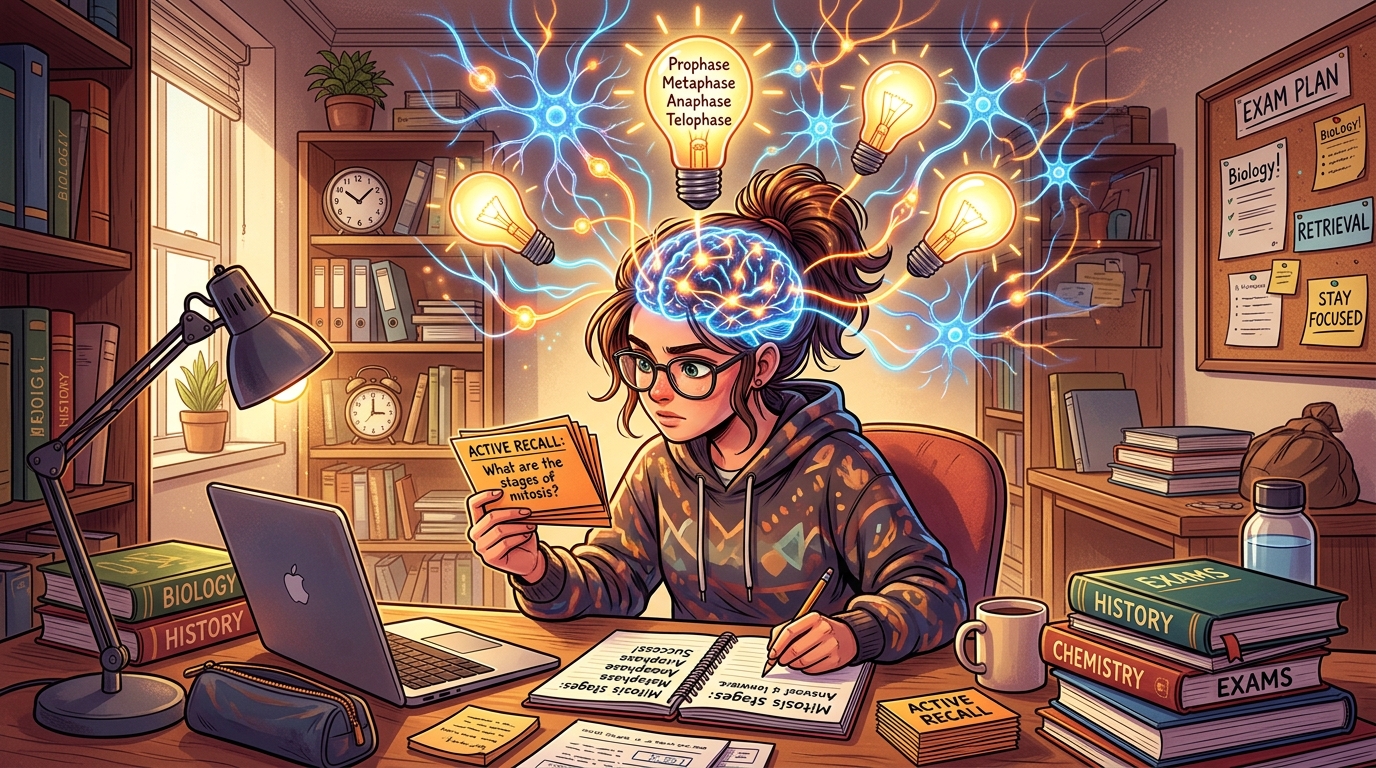
Reviewing highlighted textbook passages or passively re-reading neat notes creates an "illusion of competence"—your brain mistakes visual familiarity for true mastery. When facing the actual exam, this leads to the dreaded feeling of "I recognize this, but I can't remember the answer." To build solid recall on exam day, you must practice active recall: the science-backed technique of actively testing your memory.
Cognitive science research published in Science demonstrated that students who repeatedly tested themselves using retrieval practice scored more than double on a test one week later compared to those who repeatedly re-read the material. Instead of checking answers immediately, spending 1 to 2 seconds actively searching your memory creates the desirable difficulty that solidifies synaptic connections. Make active retrieval practice the core of your daily study routine.
Utilize Pocket Audio to Study While Commuting and Walking

Between sports practice, extracurriculars, and club activities, many students return home late, struggling with low energy and finding it hard to secure even an hour of desk study on weekdays. However, scattered pockets of time—morning and evening commutes on the bus or train, walking, school breaks, showering, or winding down before bed—often add up to 60 to 90 minutes of untapped study time every single day.
When you cannot sit at a desk with a notebook, audio-based learning provides an extraordinarily powerful solution. Using text-to-speech (TTS) features in modern flashcard apps, you can listen to terms, definitions, historical events, and science concepts through your earbuds, mentally quizzing yourself on the answers before the audio reveals them. Combining auditory input with visual text creates multimodal learning, stimulating distinct neural pathways and drastically improving retention. Top students reserve desk time for math problem-solving and essay writing, leaving factual memorization to pocket audio time.
Prevent Rote Memorization Fatigue with AI-Generated Explanations
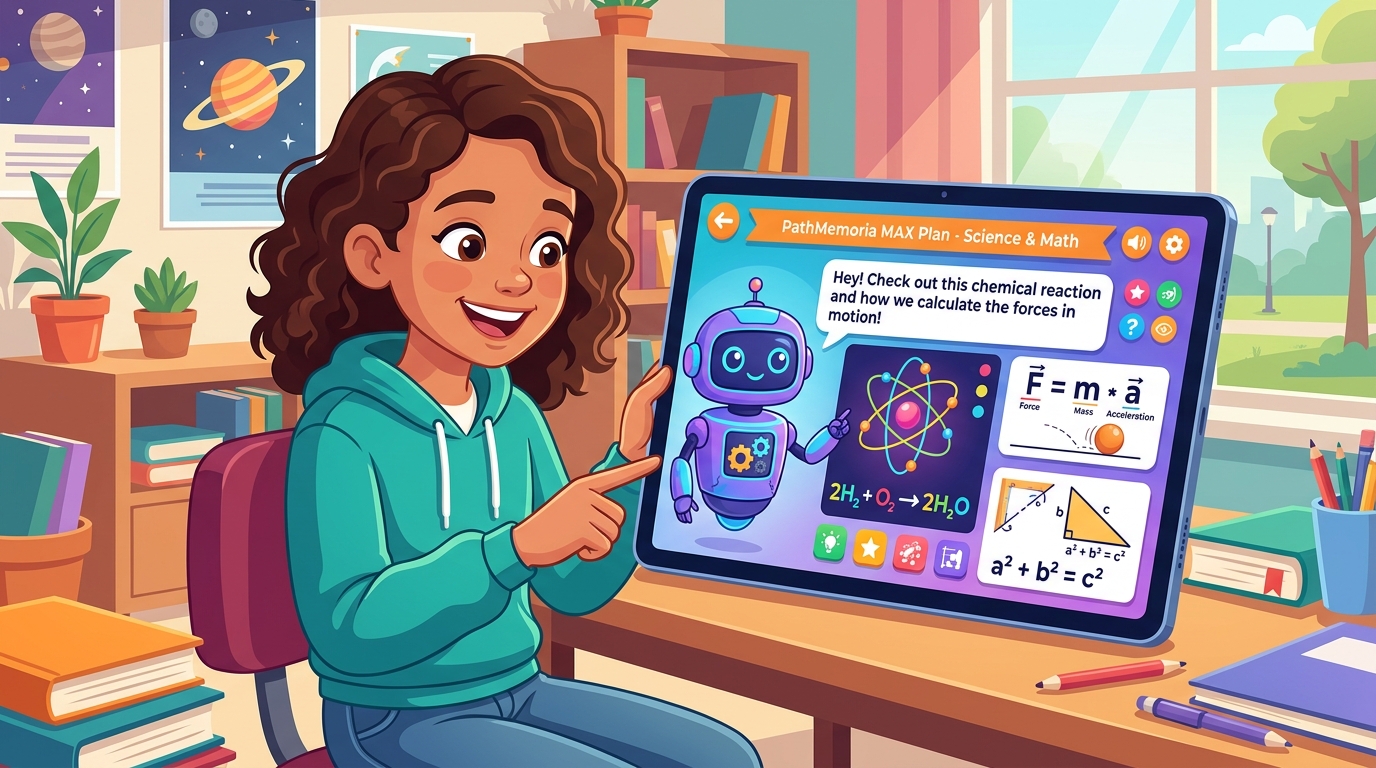
The primary reason students burn out during exam prep is rote memorization without comprehension. Trying to memorize formulas, historical events, or scientific terms without understanding their underlying mechanisms or causal context treats knowledge like random strings of text. The brain quickly discards this unanchored information within days, leaving students helpless when encountering short-answer explanations or novel application questions on exams.
Automated AI explanation generation powered by Google's state-of-the-art Gemini AI provides an immediate solution. For any flashcard or practice question, the AI instantly generates clear, intuitive explanations, formula derivations, historical narratives, and relatable real-world examples. This eliminates the need to spend 20 minutes flipping through heavy reference books. By understanding the core logic on the spot, you move beyond rote memorization and develop the conceptual mastery required to ace complex essay and application questions.
Adopt Spaced Repetition to Eliminate Cramming and Rapid Forgetting
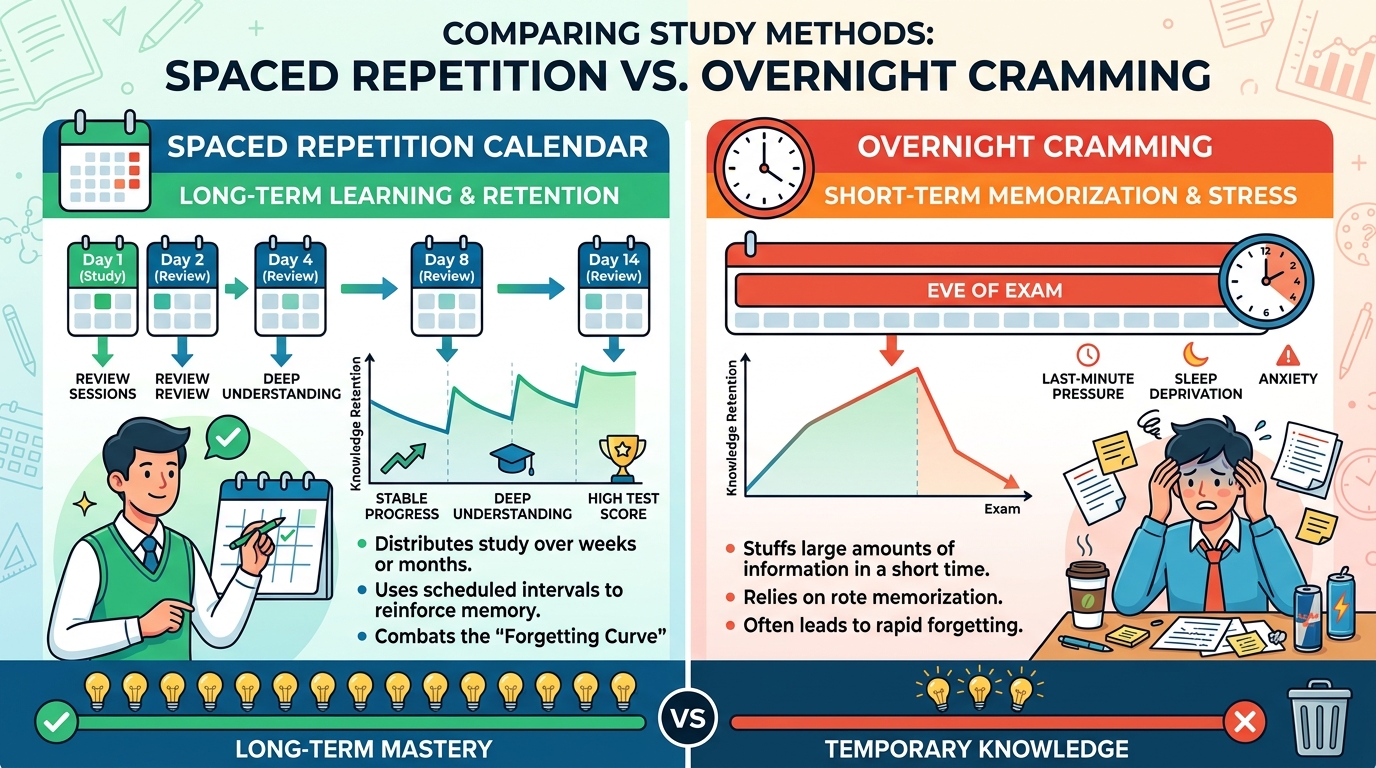
Chugging energy drinks to pull an all-nighter right before an exam is one of the least effective and most hazardous study habits from a neuroscientific perspective. Sleep deprivation impairs memory consolidation—the biological process where the hippocampus transfers new information to the neocortex—leading to brain fog and frequent careless errors during test time. Worse yet, over 80% of crammed information vanishes immediately after the exam, providing zero value for cumulative finals or college entrance exams.
Spaced repetition is the only proven scientific method to overcome this forgetting curve. By breaking study sessions into manageable 15-minute blocks starting two weeks before exams and scheduling reviews at expanding intervals (e.g., Day 1 ➔ Day 3 ➔ Day 7 ➔ Day 14), you review material right as your brain begins to forget it. Expanding intervals signal to your brain that this information is vital, cementing it into long-term memory with the fewest possible repetitions.
📝 Review Quiz 1: Check Your Understanding So Far
[Question] In cognitive science experiments, what difference in long-term retention was proven when comparing repeated textbook re-reading against active retrieval testing?
💡 Reveal Answer & Explanation
[Answer] The group practicing repeated active retrieval testing achieved more than double the retention score compared to the passive re-reading group.
[Explanation] Proven in research by Jeffrey Karpicke and colleagues published in Science. Passive re-reading merely creates an illusion of familiarity, whereas the cognitive effort of actively recalling information from memory builds resilient long-term neural pathways.
Brain Science Secrets to Maximize School Exam Scores
Once you understand the core memorization tools, the next step is applying a strategic execution plan to retain knowledge efficiently and lock in top scores within limited prep time. As a high school educator who has mentored hundreds of students, I consistently observe that struggling students rely on willpower and all-night cramming, while top performers follow structured systems that align with brain mechanics. Here are six actionable cognitive science methods to dramatically boost your school exam performance.
Reverse-Calculate Study Plans Two Weeks Before Exams
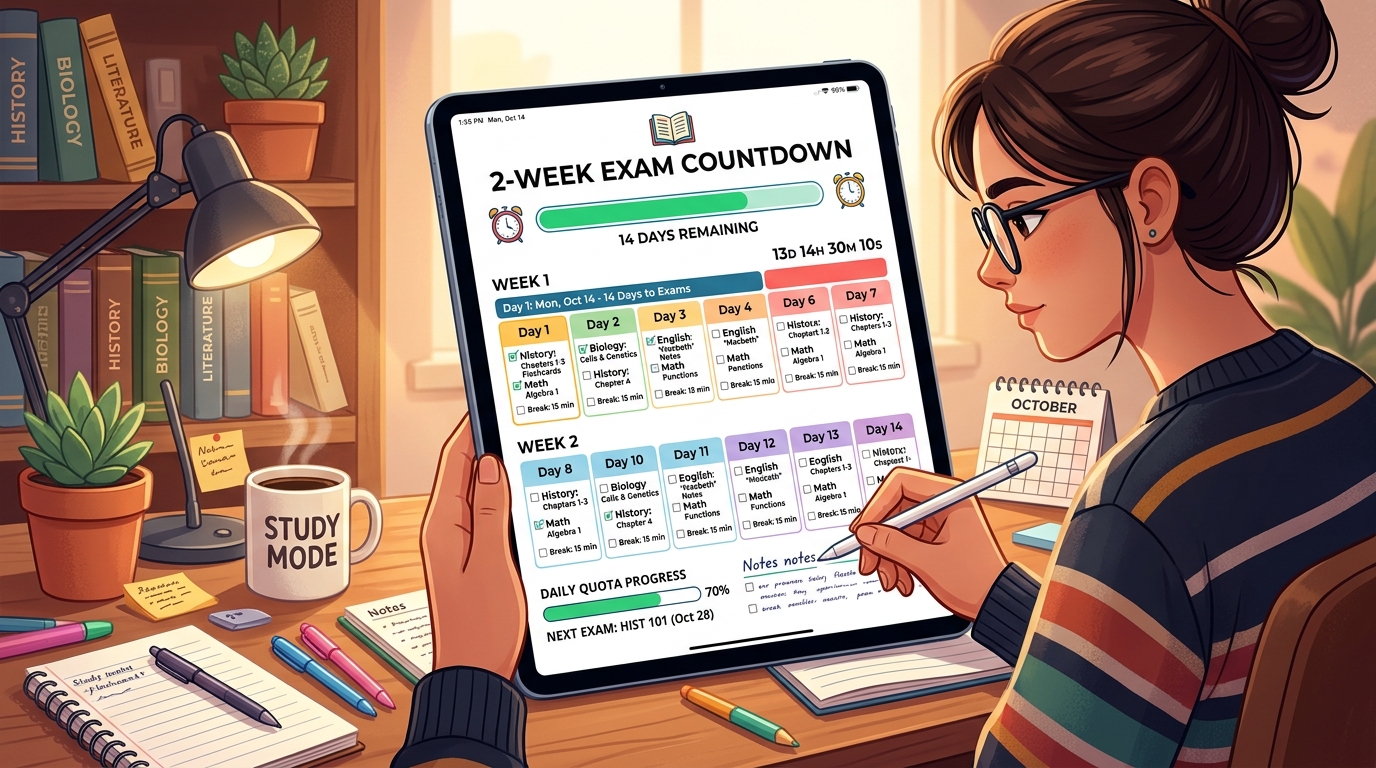
The most frequent mistake middle and high school students make is waiting until the weekend before or just three days prior to exams to begin memorizing. Cramming massive amounts of vocabulary, formulas, dates, and definitions at the last minute overwhelms working memory, resulting in fragmented recall on test day. Furthermore, acute pre-exam stress triggers excess cortisol release, which significantly impairs hippocampal function and memory retrieval.
To reach the top of your class, start your memorization routine the day exam scopes are announced—typically two weeks prior. Starting two weeks early does not mean studying for hours on end; simply load your worksheet pages into your app and review flashcards for 15 to 20 minutes daily. By exam week, over 80% of foundational terminology will already be firmly locked in your memory, allowing you to devote the final days to high-point application problems, math proofs, and practice exam simulations.
Ditch Manual Note Summaries and Focus 100% on Retrieval Testing
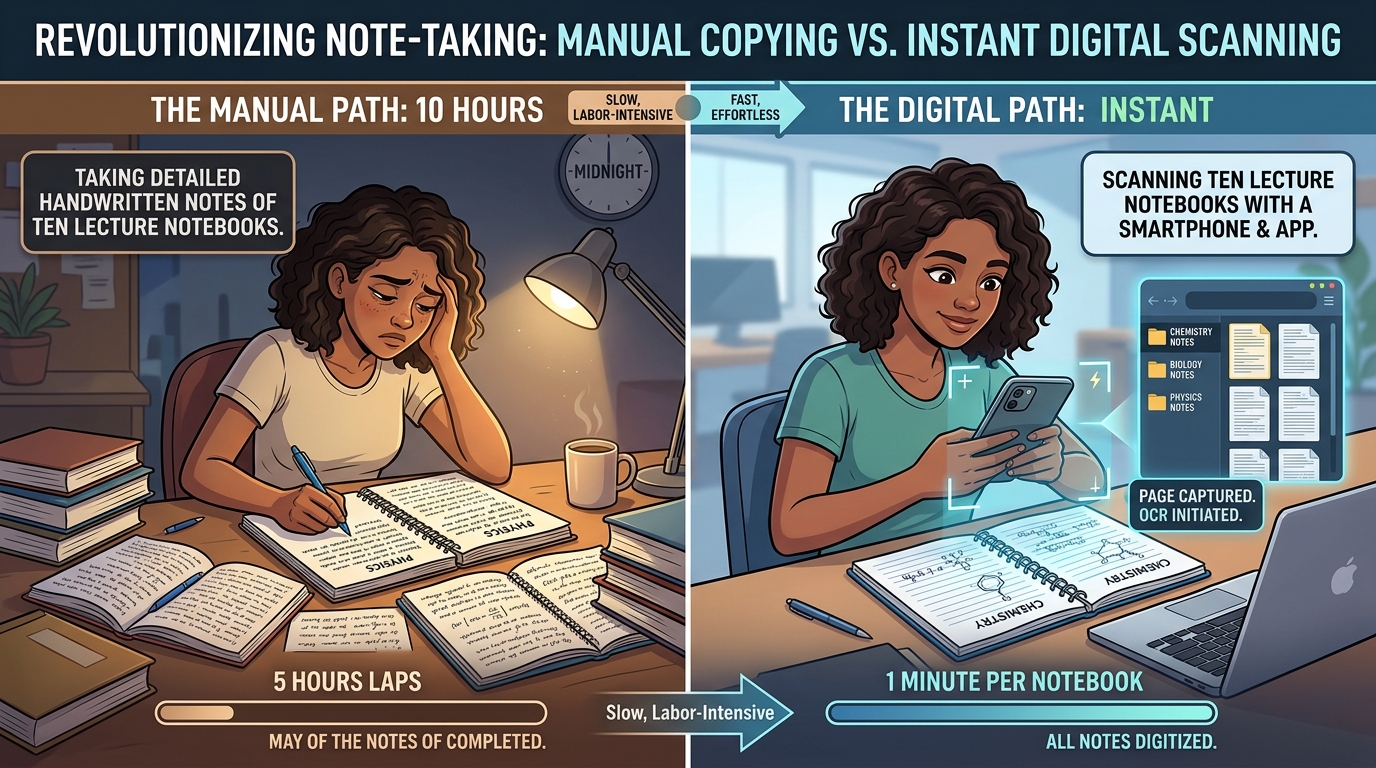
When students who study hard without seeing score gains bring me their materials, they often show beautifully color-coded summary notebooks transcribing textbook content. From a neuroscientific perspective, rewriting notes is not actual studying—it is mechanical busywork. During passive copying, the brain remains in an idle processing state, doing virtually nothing to strengthen the synaptic connections required for lasting memory.
Rather than spending five precious hours creating handwritten summaries, invest all that time into active retrieval practice. Capture diagrams and fill-in-the-blank questions on your smartphone, apply instant digital masks, and immediately begin testing yourself. By cutting out manual copying and repeatedly performing active retrieval cycles—see the prompt, retrieve the answer mentally, verify—you build genuine exam mastery in a fraction of the time.
Review Weak Topics Efficiently with FSRS Spaced Repetition AI

When exam scopes span dozens of textbook chapters and stacks of handouts, reviewing every single card equally is mathematically impossible. Re-drilling concepts you have already mastered wastes precious time, while neglecting struggling items inevitably results in lost points on the exam.
This is where modern spaced repetition algorithms like FSRS (Free Spaced Repetition Scheduler) shine. FSRS tracks your recall speed and accuracy history to calculate memory stability and forgetting risk for every single card in real time. Mastered items are automatically scheduled further out, while at-risk weak points are prioritized in today's review queue. Automating review scheduling with AI cuts total study time by over 30% while pushing retention across the entire exam syllabus above 90%.
Automate Daily Review Quotas Counted Down from Exam Day
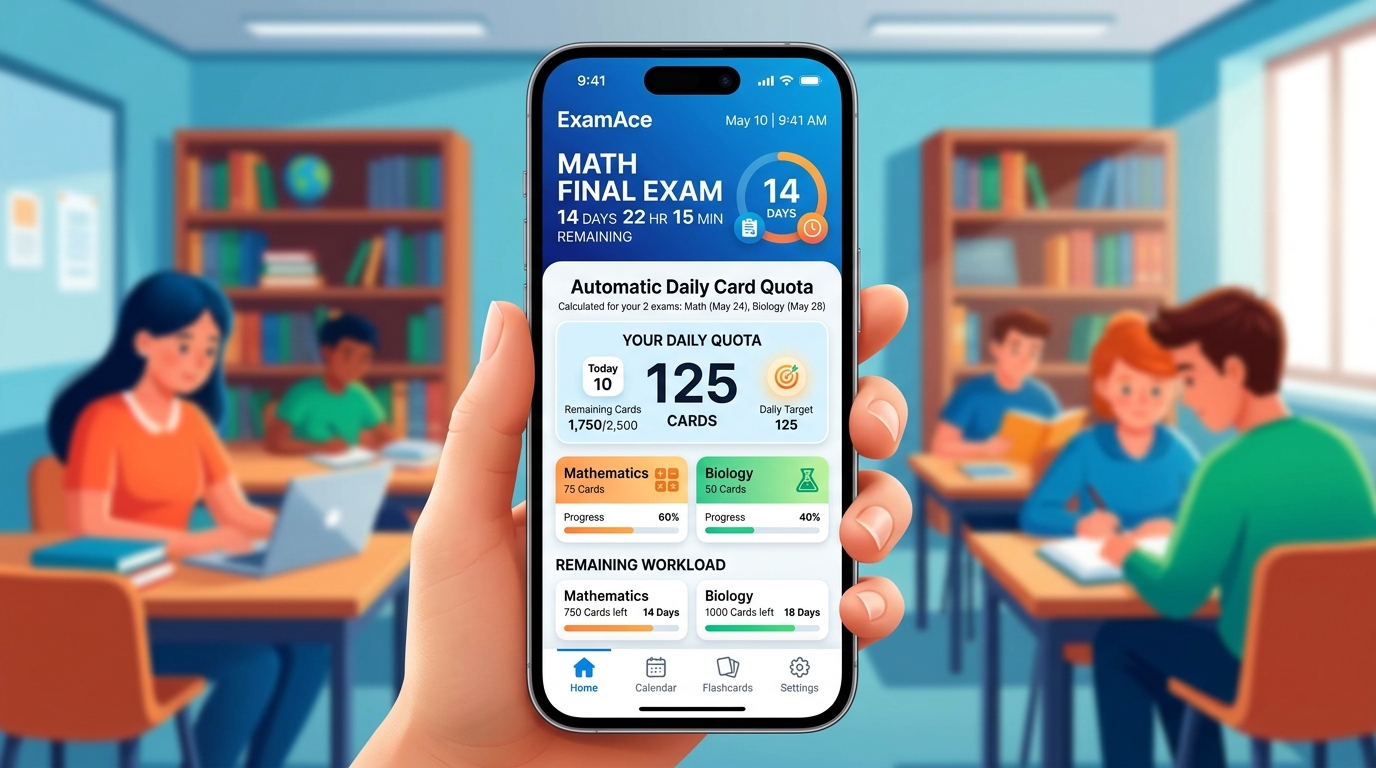
Sitting at a desk wondering "What should I study today, and how much is enough?" quickly saps motivation, leading to phone distractions. This is not a lack of willpower—it is the absence of concrete, quantified daily targets. The NIH Sleep and Cognitive Performance Guidelines emphasize that establishing structured daytime routines and avoiding late-night cramming are essential for maintaining cognitive focus and deep restorative sleep.
With target countdown features in apps like PathMemoria, entering your exam date automatically calculates exact daily quotas (e.g., "15 new cards, 25 review cards") based on your deck volume and forgetting curve data. Clearing your daily quota ensures memory retention peaks precisely on exam morning. Eliminating decision fatigue allows you to finish your assigned quota and sleep peacefully, arriving on test day fully rested and prepared.
Gamify Daily Memorization with Streaks and Level Rewards
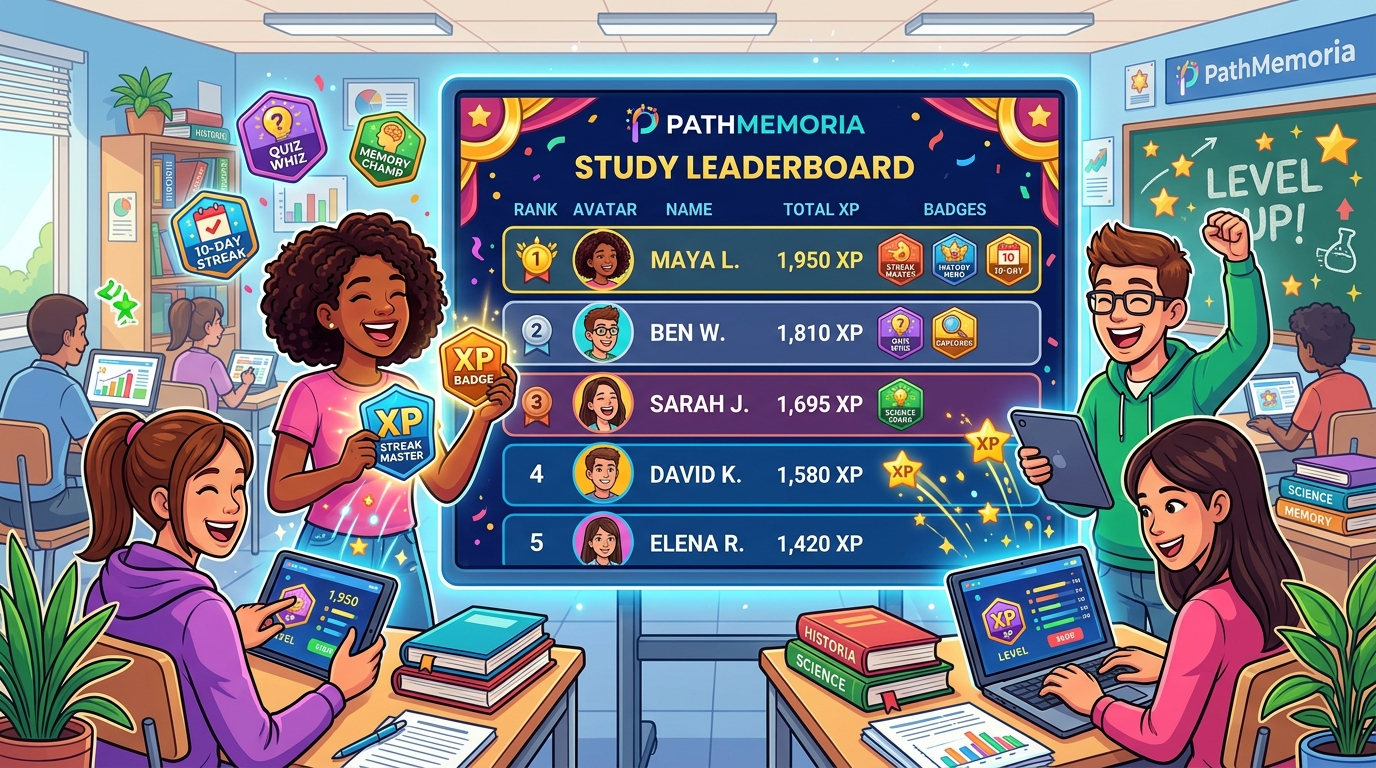
The primary obstacle to consistent memorization is monotony. Flipping through thick flashcard decks in isolation requires immense willpower, and even adults struggle to sustain it. However, much like immersive mobile games, the human brain releases dopamine when rewarded immediately following an action, creating a natural urge to repeat the behavior.
Gamification applies this neurological reward loop directly to learning. In PathMemoria, completing quiz cards grants XP (experience points), leveling up your profile and unlocking daily streak badges. Progressing through the 30-stage Kingdom of Memory turns daily review into an engaging quest. Sharing streaks with classmates and climbing weekly leaderboards creates positive social accountability—sparking the motivation to do just one quick session to keep your streak alive and cementing daily review into a lasting habit.
Conquer School Exams with a Scientifically Optimized System
Excelling on school exams does not depend on innate memory talent or grueling all-nighters. What truly matters is building and executing an evidence-based study system: using image occlusion to eliminate manual worksheet prep, deepening conceptual mastery with automated explanations from Google's latest Gemini AI, and streamlining review via FSRS spaced repetition algorithms.
Even if memorization has felt overwhelming in the past, aligning your workflow with cognitive science can cut study time in half while catapulting you to the top of your class. Consistently earning high exam scores builds unshakeable academic confidence and unlocks future scholarship and college admission opportunities. Implement these brain science protocols today and achieve your personal best on your next exam!
📝 Review Quiz 2: Master the Key Steps for Exam Success
[Question] What is the most effective three-step strategy to prevent pre-exam panic, eliminate cramming, and achieve top scores with minimal effort?
💡 Reveal Answer & Explanation
[Answer] (1) Start digitizing handouts into quiz cards two weeks before exams when scopes are released; (2) Eliminate manual note summarizing to focus 100% on active retrieval testing; and (3) Optimize daily study loads using FSRS spaced repetition AI and countdown quotas.
[Explanation] All-nighters impair hippocampal retention and cause rapid forgetting. Automating daily quotas with spaced repetition AI two weeks prior clears baseline facts early, preserving the final days for complex problem solving and application practice.
![[2026 Guide] Ultra-Efficient Memorization for Working Adults: Pass Demanding Exams While Working Full-Time](https://pathmemoria.tsmichi.com/blog/adult_cert_memorization_hero.jpg)