![[2026 Guide] Professional Certification Exam Memorization: Pass Fast with Zero Wasted Time](https://pathmemoria.tsmichi.com/blog/blog_cert_exam_2026_hero.jpg)
Hello, I'm Taku. Are you struggling to find enough study time for your professional certification exams while juggling a busy job and daily life? Many people buy thick textbooks only to feel overwhelmed by the sheer volume of technical terms, legal statutes, and past exam questions, eventually giving up halfway through. It is an all-too-common, frustrating experience to spend countless hours memorizing critical concepts, only to draw a complete blank when taking weekend mock exams or practice tests.
When working professionals pursue certifications, the deciding factor between passing and failing is never innate memory ability. Instead, it comes down to strategy: stripping away unnecessary manual labor and engraving knowledge into the brain via science-backed, ultra-efficient pathways. In line with the U.S. Department of Education Lifelong Learning Guidelines, leveraging digital tools for efficient reskilling and upskilling is now essential. In this guide, I will share the ultimate time-saving memorization protocol designed to help busy professionals pass their certification exams on the very first try with minimal effort.
Study Methods to Dramatically Boost Certification Exam Memorization
Passively skimming through thick textbooks during the limited hours after work stimulates the brain very little, wasting precious time. To reach the passing score in the shortest possible time, you must eliminate inefficient busywork and adopt high-yield memorization methods validated by cognitive science. Here are five actionable strategies that will dramatically elevate your daily study efficiency.
Excel Integration to Batch Import Thousands of Qualification Terms
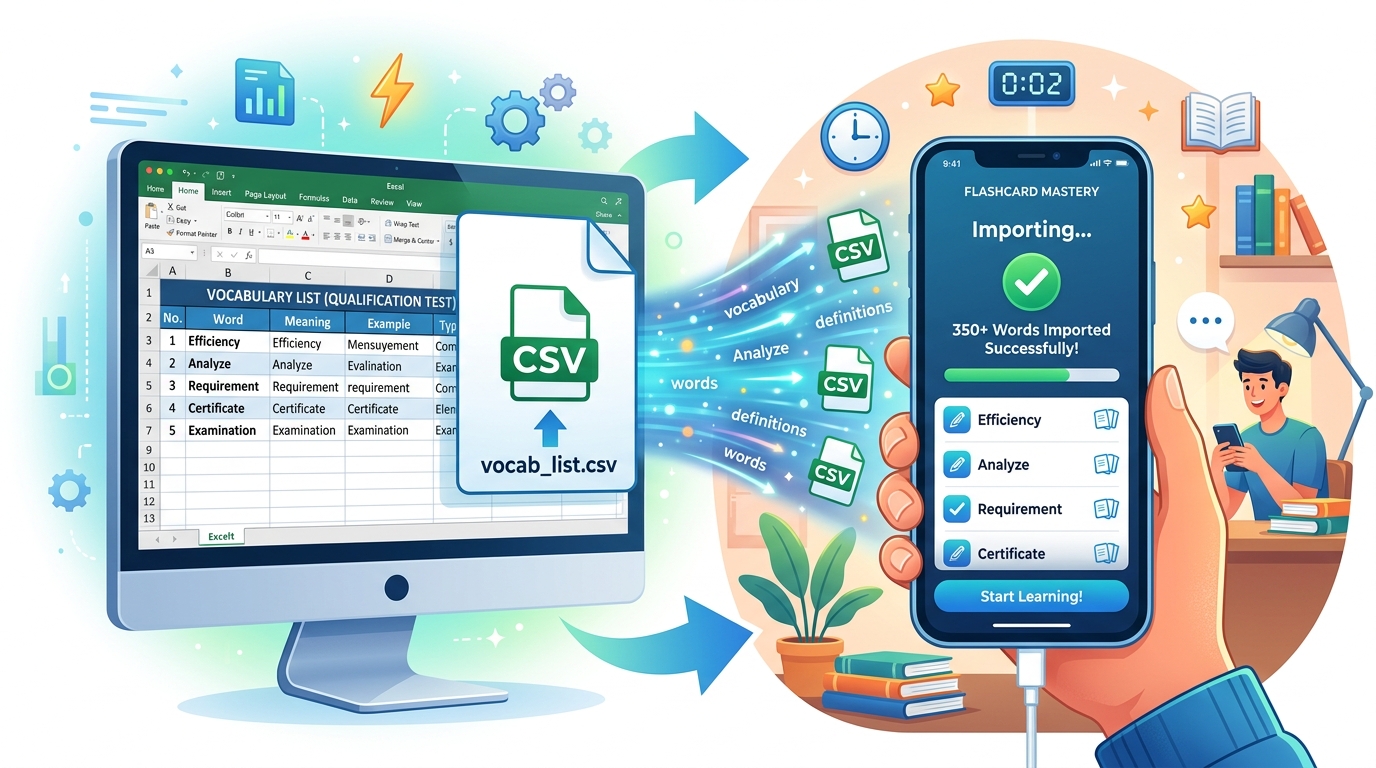
For certifications such as CPA, CFA, PMP, AWS, and legal bar exams, the technical terms and multiple-choice options you need to memorize easily reach into the thousands. The single biggest trap test-takers fall into is manually typing questions one by one onto paper index cards or phone screens. As an active high school teacher, I see this frequently during academic counseling: students exhaust all their mental energy handcrafting beautiful flashcards and neat summary notebooks, only to run out of stamina before actually practicing active recall quizzes.
The smart approach for busy professionals is organizing vocabulary terms in Excel or Google Sheets on a PC and batch-importing them as CSV files. With spreadsheets, you can copy, paste, and organize hundreds or thousands of concepts from official glossaries or practice question banks in just minutes. By reducing non-value-adding card creation time to absolute zero, you can channel 100% of your energy into repetitive testing from day one, giving you an unbeatable competitive edge over other candidates.
Batch AI Explanations to Auto-Generate Technical Context and Examples
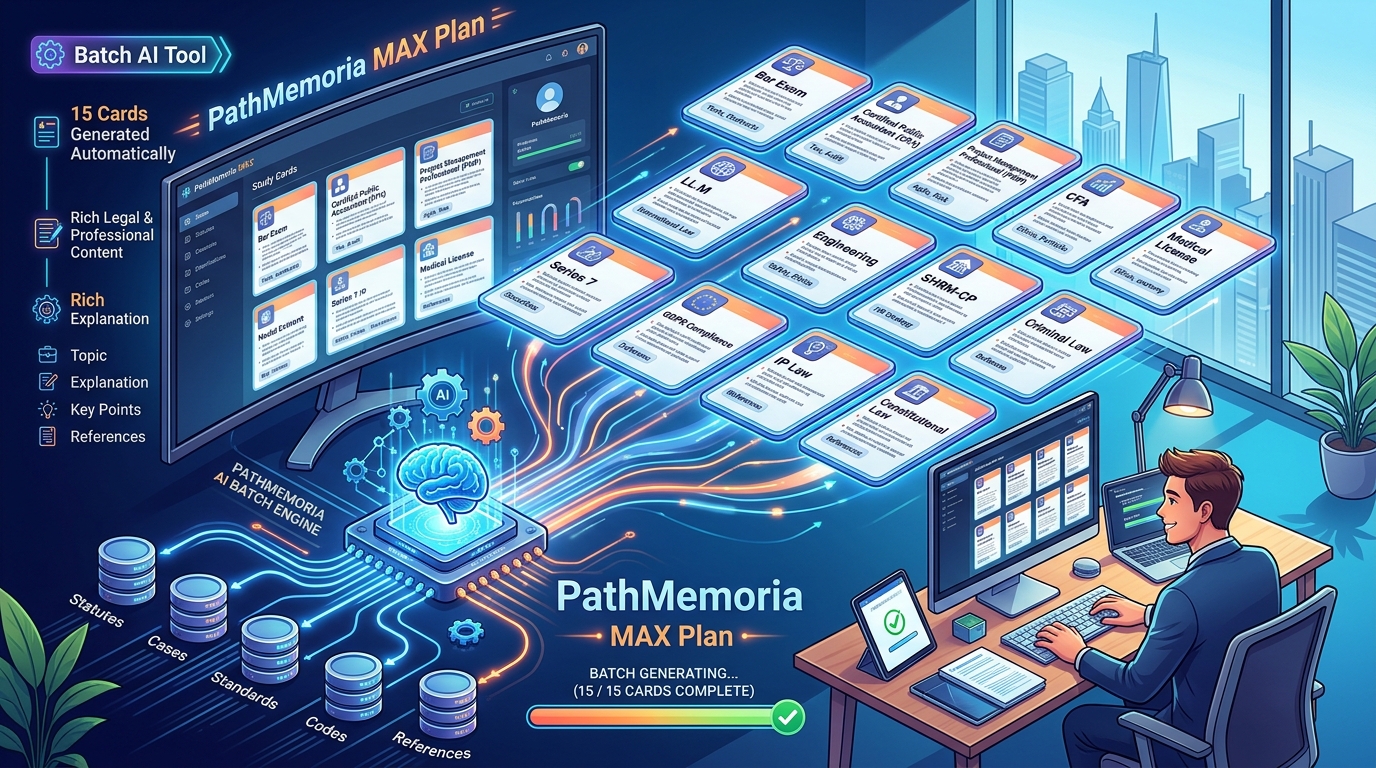
Writing detailed explanations for thousands of imported terms by manually flipping through dense textbooks and legal commentaries demands enormous time and energy. However, shallow rote memorization of bare terms and definitions leaves you defenseless against complex case studies or rephrased applied questions. Without foundational understanding and conceptual context, facts become meaningless strings of characters that your brain quickly discards into oblivion.
This challenge is solved effortlessly by the Batch AI Explanation feature powered by Google's state-of-the-art Gemini AI. Simply select multiple unannotated terms or intricate legal statutes, and the AI will automatically generate high-quality explanations complete with real-world case examples, statutory prerequisites, legal ramifications, and common exam trap patterns. By eliminating manual dictionary lookups while deepening your conceptual grasp of the underlying logic, even complete beginners can master challenging certification curricula smoothly and confidently.
Image Occlusion to Turn Textbook Diagrams and Options into Quizzes
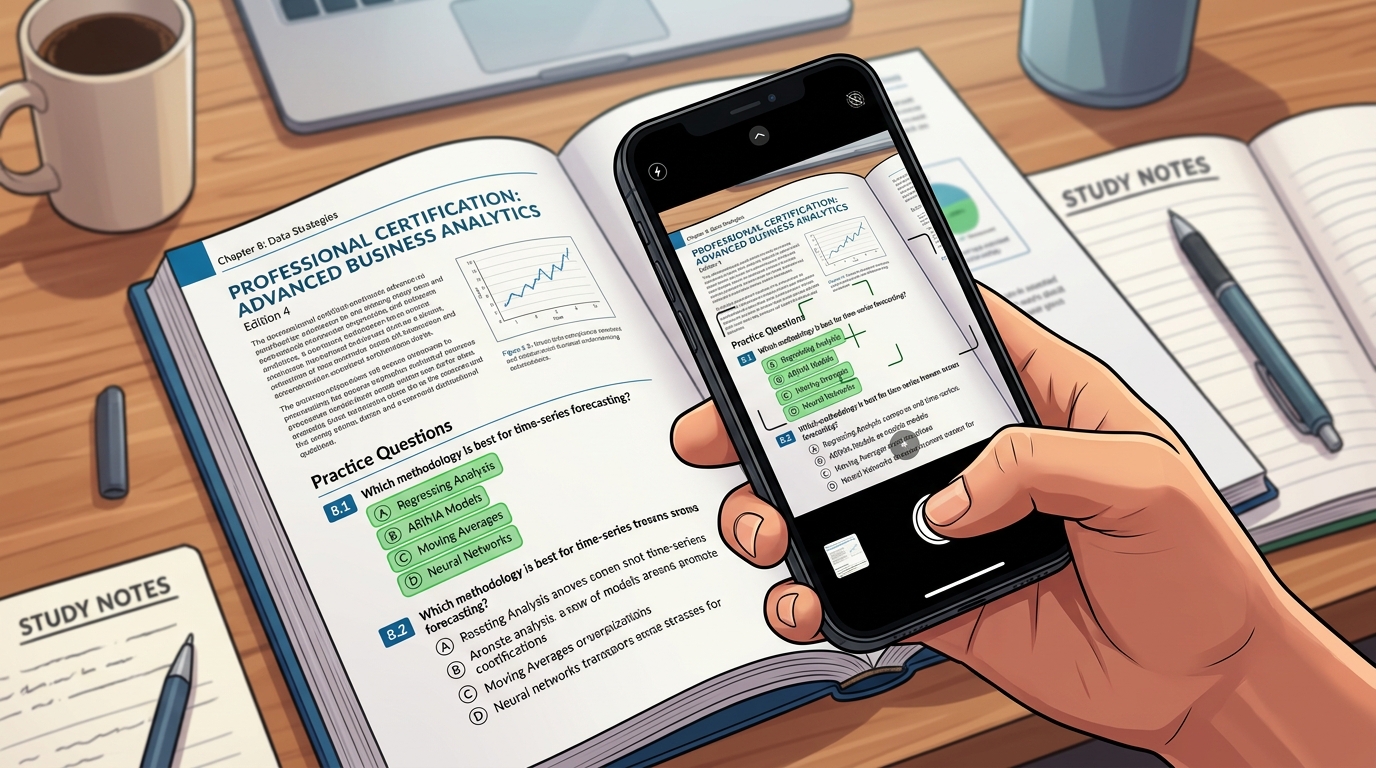
Certification textbooks are packed with complex visual information that text alone cannot adequately capture—such as contract relationship charts, structural building codes, network protocol architectures, and financial income statements. Transcribing these visual diagrams into text-based flashcards takes hours and strips away the spatial relationships and holistic nuances essential for true comprehension.
This is where Image Occlusion proves exceptionally powerful by turning textbook snapshots directly into fill-in-the-blank visual quizzes. Simply snap a photo of a textbook page and drag digital occlusion masks over key labels, terms, or formula variables to generate interactive cloze tests in seconds. In my classroom teaching, students who learn biological organ layouts or historical battle formations via image masking retain knowledge far faster than those relying solely on text. Because concepts are encoded alongside their visual and spatial positioning, entire diagrams vividly reappear in your mind during the actual exam.
Pocket Audio Learning to Turn Commutes into Productive Review Sessions

The primary reason busy professionals fail certification exams is rarely an absolute lack of study time, but rather the unrealistic ambition of waiting for large blocks of uninterrupted desk time. When overtime work or family obligations disrupt rigid study plans, days go by without opening a book. High achievers who pass on their first attempt transform everyday micro-moments—crowded commutes, elevator waits, walking between appointments, and even bathing—into continuous memorization opportunities.
The most effective way to optimize micro-moments is multimodal auditory learning powered by high-fidelity text-to-speech (TTS) engines. Engaging both visual and auditory sensory channels stimulates distinct neural networks, creating robust multi-pathway memory traces in the brain. Even in packed trains, during brisk walks, or while doing household chores where looking at a screen is impossible, listening to prompt audio through earbuds and mentally retrieving the answer turns everyday dead time into a premium study session.
Active Recall to Solidify Knowledge into Long-Term Memory
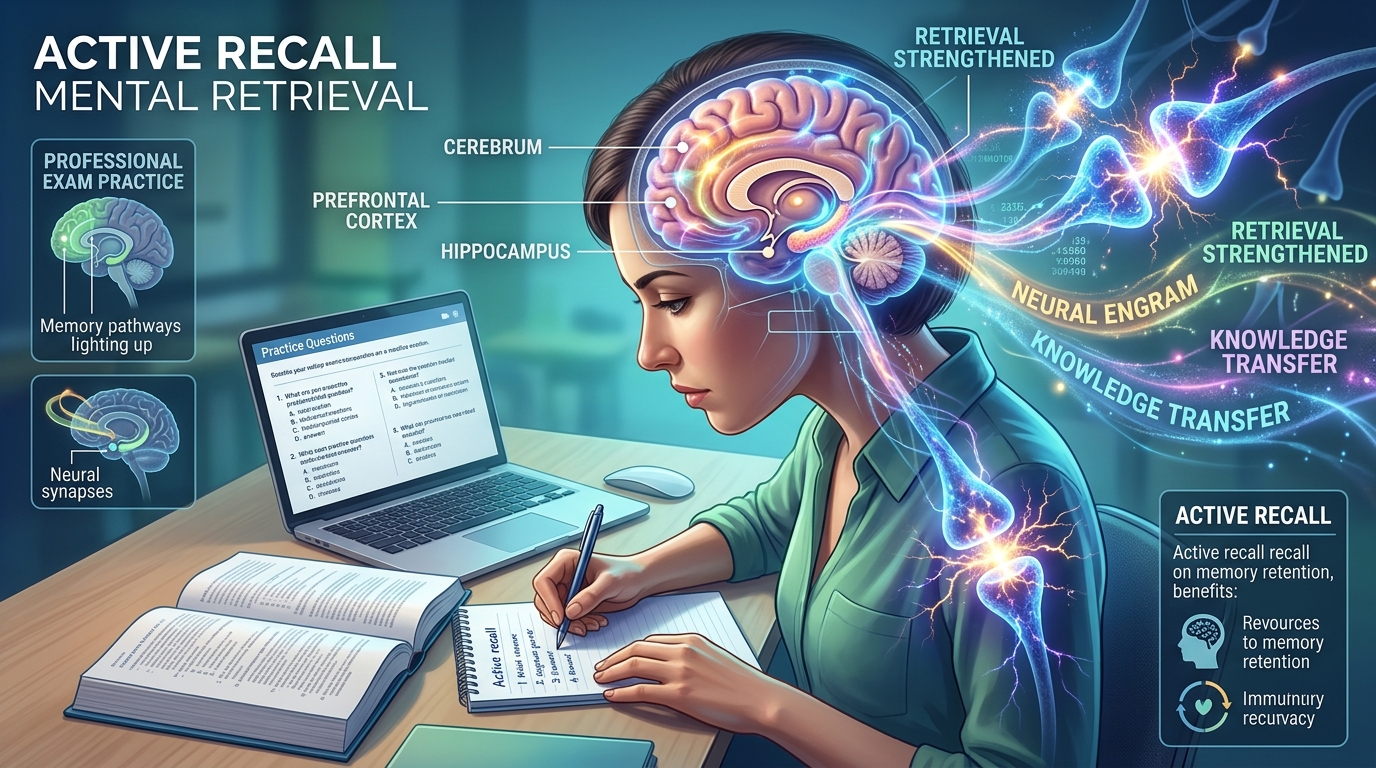
Highlighting textbook passages and repeatedly re-reading notes feels deeply satisfying, but cognitive science has proven that passive re-reading yields the lowest long-term retention rate of all study habits. The human brain does not solidify neural pathways when passively receiving information; rather, synaptic connections are dramatically strengthened when you exert deliberate effort to retrieve stored knowledge from memory archives.
In a landmark study published in Science (Science Research on Retrieval Practice), cognitive psychologist Dr. Jeffrey D. Karpicke and colleagues compared long-term retention between students who repeatedly re-read material and those who practiced active retrieval testing. One week later, the re-reading group retained only about 36%, whereas the active recall testing group achieved a staggering about 80%—more than 2.2 times higher retention. Cultivating the habit of asking yourself 'What was the answer?' and mentally struggling to retrieve it builds rock-solid competence that holds up under intense exam pressure.
📝 Review Quiz 1: Check Your Understanding So Far
[Question] In professional certification exam prep, what is the difference in one-week long-term memory retention between passive textbook re-reading and active self-testing (active recall)?
💡 Show Answer & Explanation
[Answer] While the passive re-reading group retained only about 36%, the active retrieval testing group achieved approximately 80%—demonstrating a massive 2.2x to 2.4x advantage in long-term retention.
[Explanation] This was experimentally demonstrated in the 2008 Science paper by Dr. Karpicke et al. Passive input provides weak cognitive stimulation, whereas the deliberate mental strain of active recall triggers memory consolidation, transferring knowledge from the temporary hippocampus into permanent cerebral cortical storage.
Brain Science Secrets to Pass Certification Exams on the First Try
No matter how many advanced tools or prep books you collect, studying in ways that oppose the brain's natural memory mechanisms will yield disappointing results. For working adults fatigued by professional and domestic responsibilities, brute-force cramming and pulling all-nighters are no longer viable. To secure a first-time pass via the most direct path, your study strategy must conform to cognitive science principles dictating how the brain converts short-term input into durable long-term memory. Drawing on my classroom experience mentoring students through competitive academic turnarounds, here are five proven brain science principles to maximize your certification prep efficiency.
Eliminate Manual Preparation Labor to Dedicate 100% to Active Testing
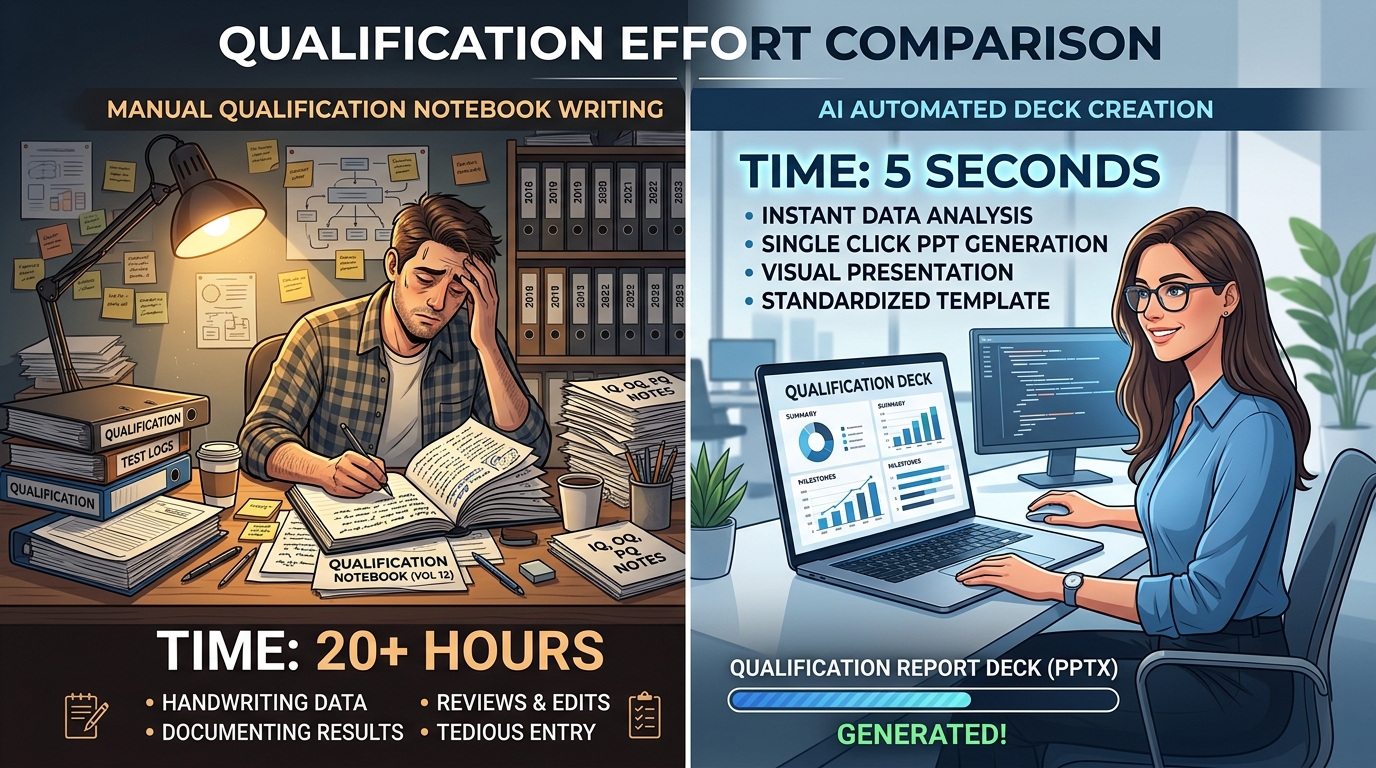
The most hazardous pitfall for working professionals preparing for certification exams is exhausting their limited energy on handcrafting flashcards and summary notes. In school environments, I have seen countless students feel accomplished after copying aesthetic notes with colorful gel pens, only to fall behind because they ran out of time for rigorous mock testing. For busy adults, wasting precious weekday evening hours on manual data entry or handwritten index cards is a critical loss of study capital.
Candidates who pass on their first attempt strictly separate 'material preparation' (clerical work) from 'memory consolidation' (active retrieval). By leveraging batch CSV imports from Excel or Google Sheets and instant clipboard conversion, preparation time drops to practically zero. Conserving every ounce of willpower and directing 100% of your cognitive energy into answering retrieval prompts is the single most essential requirement for clearing demanding passing thresholds.
Overcome Rote Memorization with Deep AI Conceptual Backgrounds
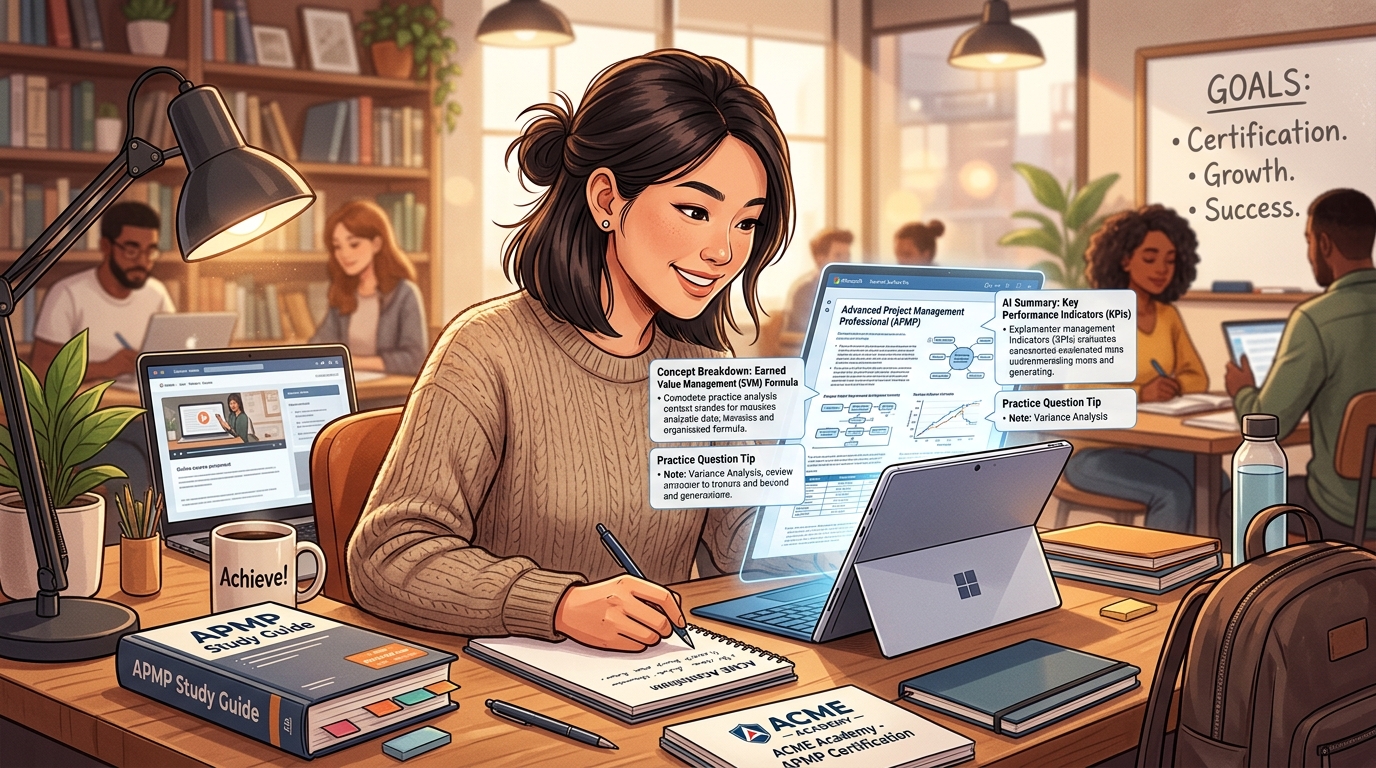
The second leading cause of burnout in self-directed certification study is hitting a wall with terse textbook answer keys that force you into blind rote memorization. Professional certifications—whether in accounting, cloud engineering, project management, or regulatory law—feature hundreds of complex, specialized terms. Cramming these definitions without understanding their underlying rationale overloads working memory, leaving you unable to navigate subtle question variations on exam day.
In cognitive psychology, linking new information to existing knowledge and concrete real-world examples is called 'elaborative rehearsal,' and it is the master key to forming durable long-term memories. With PathMemoria's Batch AI Generation, Google's latest Gemini AI instantly analyzes your flashcards to supply practical business examples, legal rationales, and distinctions between easily confused terms. Eliminating the frustration of cross-referencing multiple reference books creates an environment where you truly understand what you memorize, enabling seamless retention across vast exam syllabi.
Slash Review Time by 30% with FSRS v6 Spaced Repetition AI
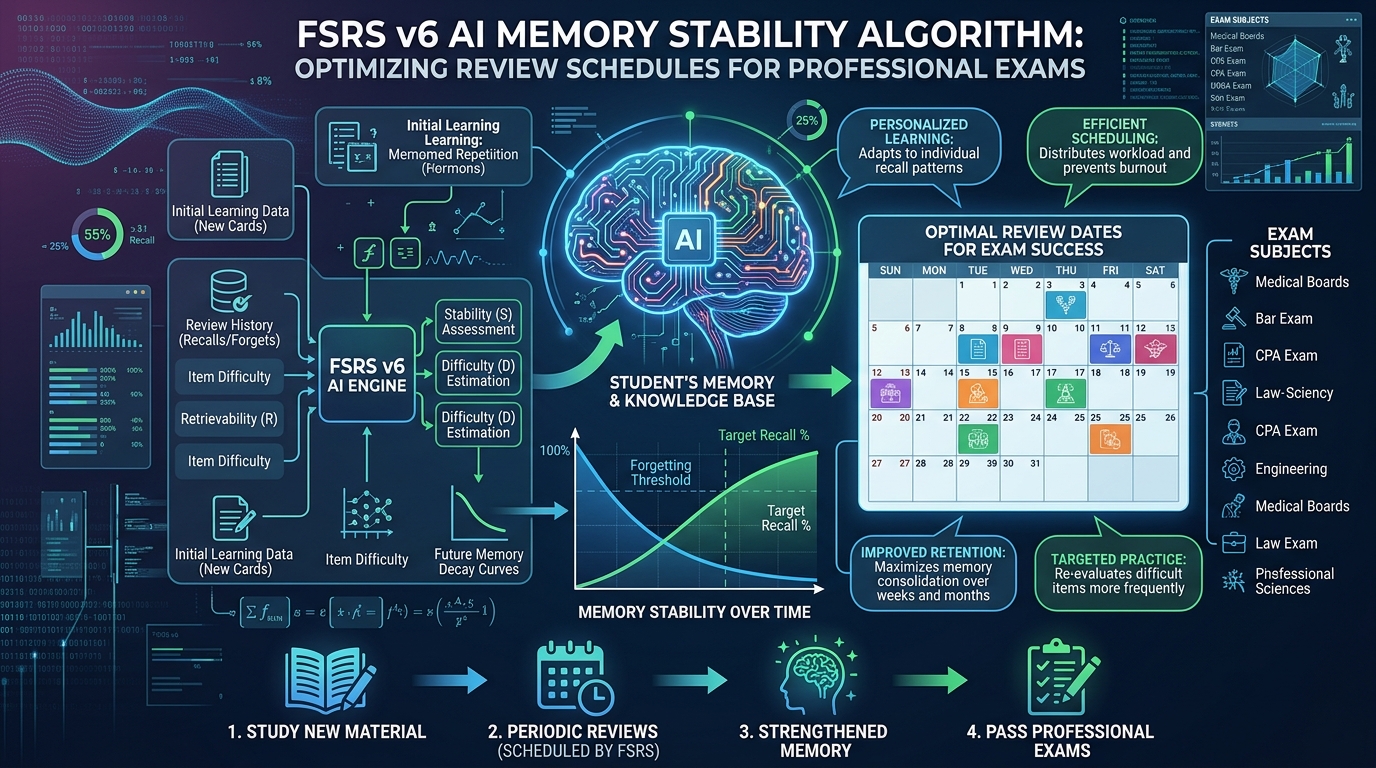
Passing score margins are determined almost entirely by review efficiency. A common misstep among learners is repeatedly reviewing easy cards they have already mastered to feel productive, while neglecting challenging, easily forgotten topics until it is too late on test day. To achieve high scores within limited study hours, you must practice spaced repetition: reviewing only items on the verge of being forgotten at the mathematically optimal moment.
PathMemoria natively incorporates the cutting-edge FSRS (Free Spaced Repetition Scheduler) algorithm. Unlike legacy spaced repetition models like SM-2, FSRS calculates multi-dimensional parameters including Memory Stability and Card Difficulty based on your exact response accuracy and recall latency. Cards with strong retention are pushed weeks or months into the future, while fragile cards are prioritized in today's review queue. This slashes total review time by roughly 30% while sustaining a 90%+ retention rate on exam day.
Automate Daily Card Quotas by Reverse-Calculating from Exam Dates
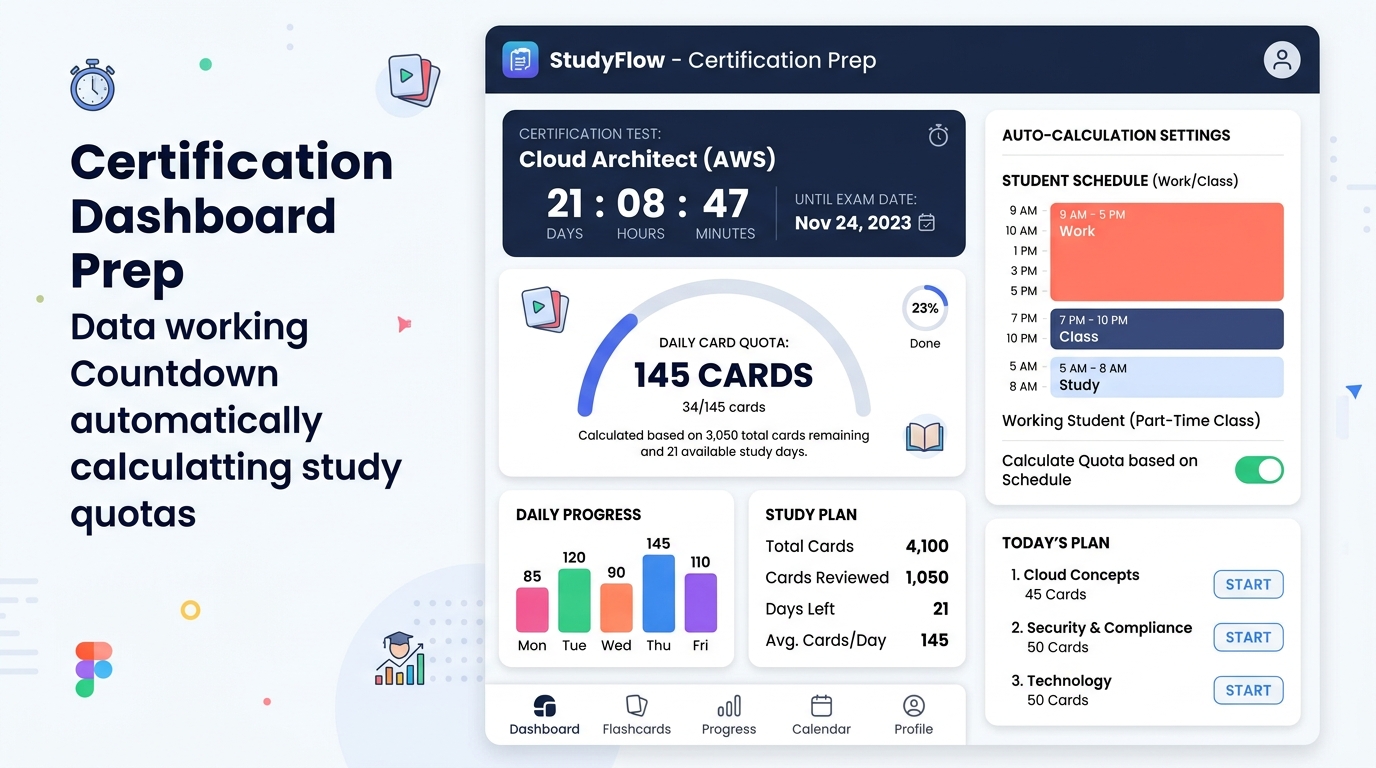
A classic reason independent learners fail to execute study plans is setting vague goals like 'read through the prep book three times before test day.' When milestones lack precision, falling behind during busy workweeks triggers panic, leading to desperate last-minute cramming sessions. As underscored in the NIH Behavioral & Sleep Research Guidelines, sleep deprivation severely impairs memory consolidation and cognitive focus, rendering frantic all-nighters counterproductive.
The secret to securing a first-time pass is automating your daily study quota by reverse-calculating from exam day. In PathMemoria, registering your target exam date enables the AI to calculate the exact number of new and review cards you need to complete each morning, factoring in total syllabus volume, remaining days, and your personal forgetting curves. Knowing your precise daily target the moment you open the app eliminates decision fatigue and builds steady momentum toward exam day.
Gamify Study Habits with XP Rewards and Consecutive Streaks
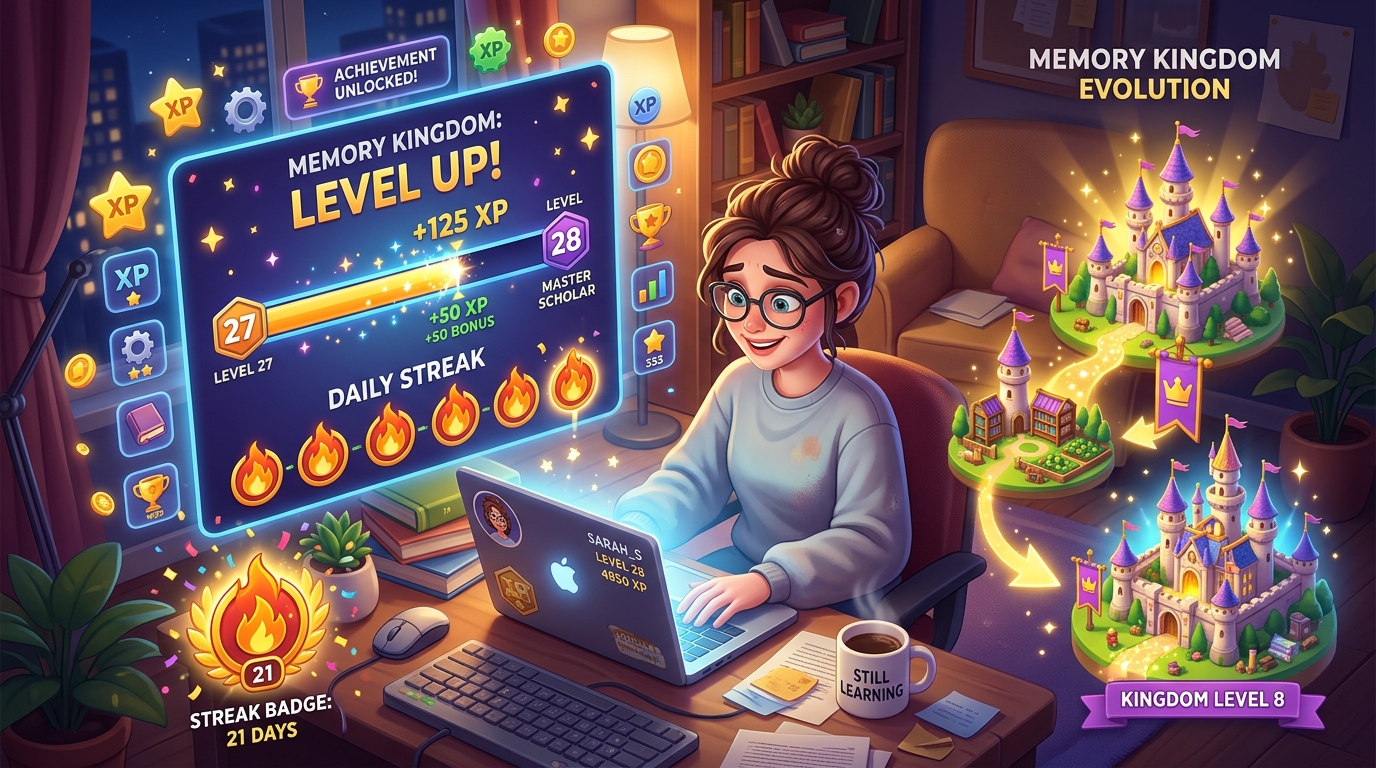
After a demanding day at the office, resolving to sit down for two hours of textbook reading requires immense willpower. Relying strictly on raw discipline or grit inevitably collapses when late-night projects or fatigue strike. The most sustainable way for working professionals to maintain consistency over months is transforming study sessions into dopamine-driven gaming experiences that the brain genuinely enjoys.
Integrating insights from behavioral economics and neuroscience, PathMemoria rewards each correct answer with XP, leveling up your profile and awarding streak milestone badges. It also includes gamified features like the Memory Kingdom, where your virtual realm expands as you master new decks. Telling yourself 'I'll just review for three minutes to keep my streak alive' triggers cognitive momentum, making daily study targets feel effortless and rewarding.
Conquer Certification Exams with a Scientifically Optimized System
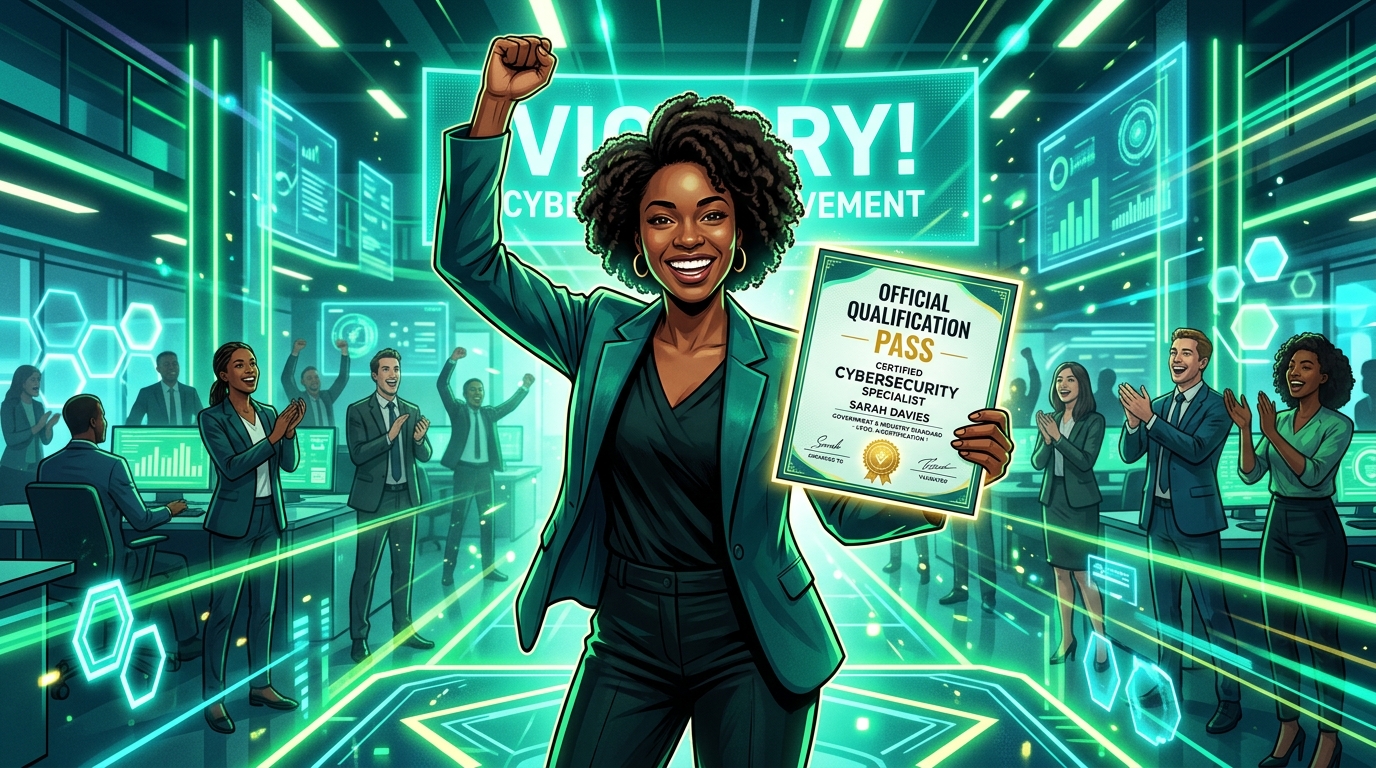
Preparing for professional certifications is never a contest of innate genius or photographic memory. Facing vast exam syllabi with limited free time is a strategic challenge: how efficiently can you deploy an evidence-based system stripped of all waste? Having coached hundreds of students as a high school teacher, I can attest that those achieving remarkable results in record time are never the ones pulling all-nighters through sheer grit—they are the ones who relentlessly utilize systems tailored to how the brain actually learns.
By eliminating deck creation bottlenecks with Excel/CSV batch imports and unlocking deep conceptual understanding through Google's state-of-the-art Gemini AI, you lay a solid foundation. By slashing review hours with FSRS spaced repetition AI and turning idle moments into prime study time with automated daily quotas and gamified rewards, you maximize your chances of success. Implementing this streamlined, scientific protocol empowers even the busiest professional to pass challenging exams on their very first attempt. Turn your dedication into a passing certificate by launching your optimized study system today.
📝 Review Quiz 2: Key Brain Science Principles for Certification Success
[Question] What are the three core pillars required for busy working adults to avoid burnout and pass certification exams on the first try with minimal study time?
💡 Show Answer & Explanation
[Answer] 1) Eliminate card creation busywork via Excel/CSV batch imports, 2) Prevent rote memorization through deep conceptual explanations generated by Google's latest Gemini AI, and 3) Slash review time by roughly 30% using FSRS spaced repetition AI to target only fragile memories at optimal intervals.
[Explanation] For working adults, eliminating upfront preparation time, engaging in elaborative rehearsal for true comprehension, and pruning redundant reviews via cognitive forgetting curves create the winning edge. Systematizing these three pillars delivers maximum retention within minimal study windows.

![[2026 Guide] Ultra-Efficient Memorization for Working Adults: Pass Demanding Exams While Working Full-Time](https://pathmemoria.tsmichi.com/blog/adult_cert_memorization_hero.jpg)